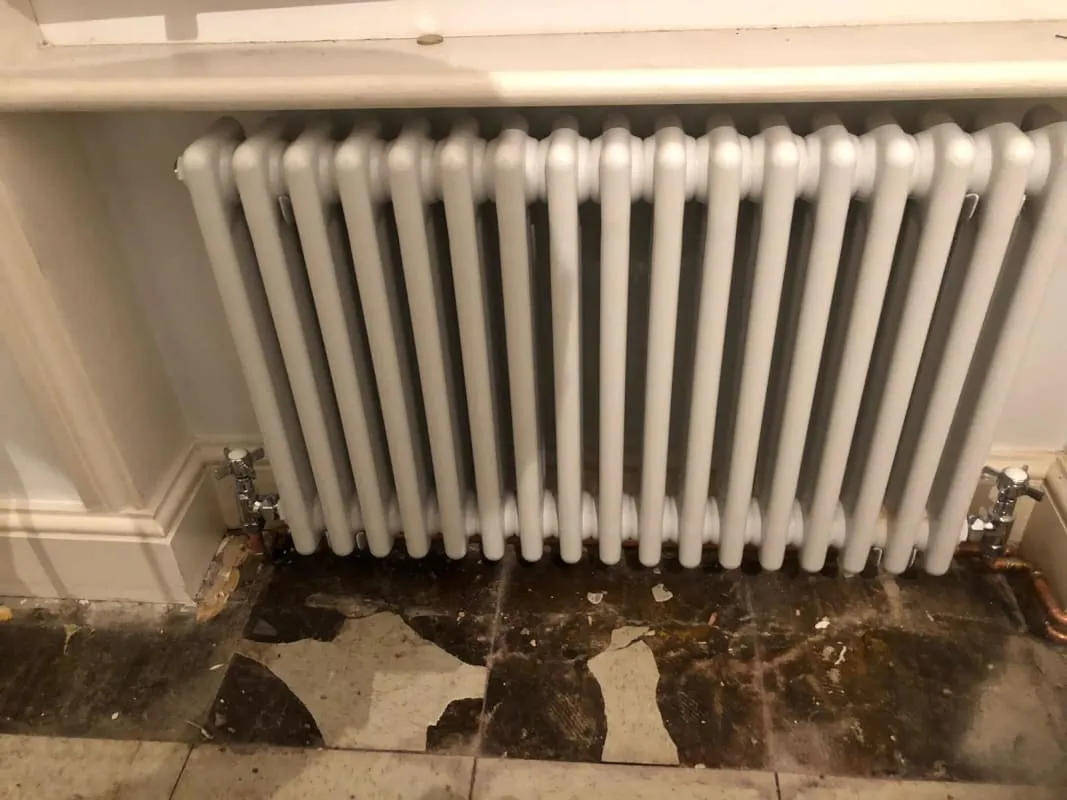
How to bleed a radiator: a step-by-step guide
How to bleed a radiator safely in ten minutes, which radiators to do first, and why you must check your boiler pressure afterwards on a combi or system boiler.
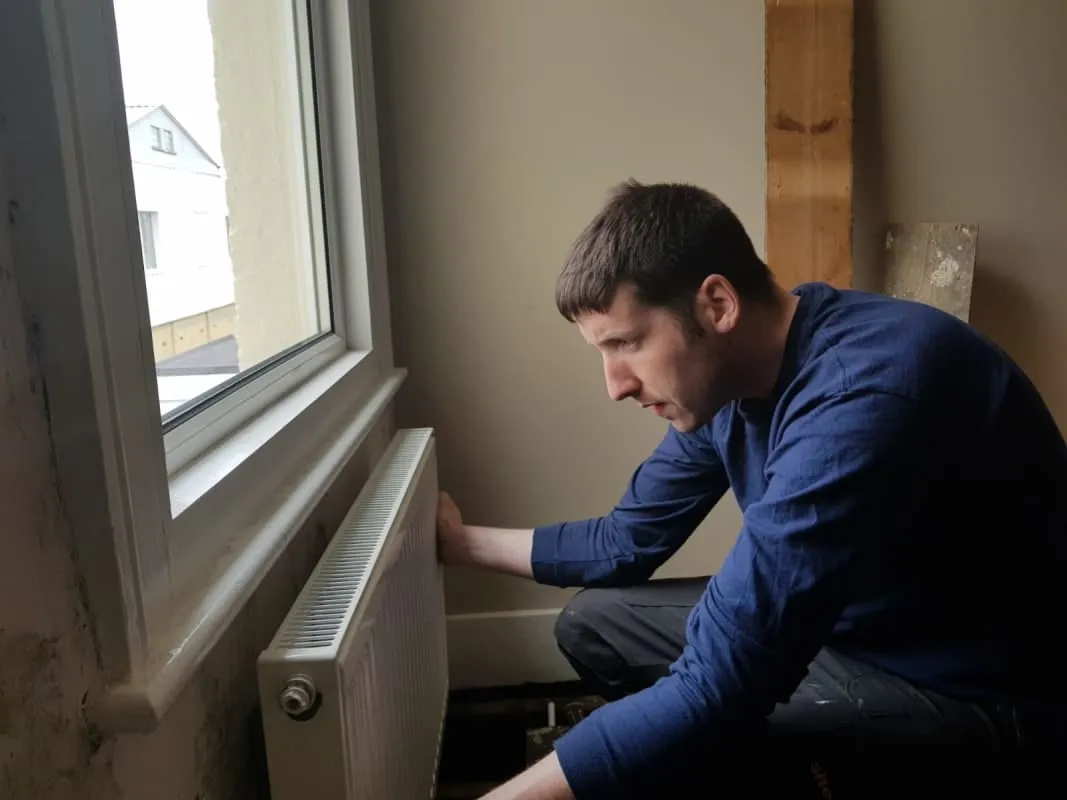
To bleed a radiator, turn the heating off, let it cool, then open the small bleed valve at the top corner with a radiator key until the hissing stops and water appears, and close it again. On a combi or system boiler, finish by checking the pressure gauge and topping it up if it has dropped below 1 bar.
It is one of the most useful jobs a homeowner can learn, it costs nothing, and it fixes the most common heating complaint we hear in autumn: radiators that are cold at the top.
Signs your radiators need bleeding
- The radiator is cold at the top and warm at the bottom
- You hear gurgling, bubbling or trickling in the radiator or pipes
- The room takes longer to warm up than it used to
- The heating has just been drained or worked on
If the radiator is cold at the bottom instead, bleeding will not help, as that usually points to sludge. Our guide to a radiator cold at the top or bottom explains the difference.
What you need
- A radiator key. Hardware shops sell them for very little, and many newer radiators have a slotted bleed screw that takes a flat-head screwdriver instead.
- An old cloth or towel
- A small bowl or cup to catch drips
How to bleed a radiator, step by step
- Turn the heating off and wait until the radiators are cool. Hot water can scald, and with the pump off the air settles at the top where you can get it out.
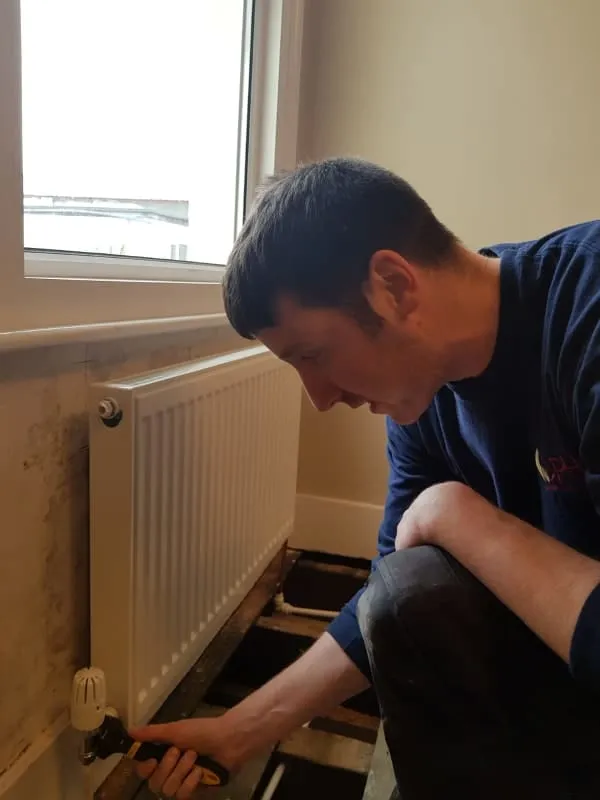
- Find the bleed valve. It is a small square or slotted fitting at one of the top corners of the radiator.
- Hold the cloth under the valve and the bowl beneath it.
- Fit the key and turn it anticlockwise about a quarter to half a turn. You only need to loosen it. Never take the screw right out.
- Listen for the hiss. That is air escaping. Keep the key in place.
- Close the valve as soon as water appears. A steady dribble of water with no spitting means the air has gone. Turn the key clockwise until it is snug, but do not force it.
- Wipe the valve dry and check it is not dripping.
- Move on to the next radiator that needs it.
- Check the boiler pressure once you have finished (see below).
- Turn the heating back on and check each radiator warms evenly after 20 minutes or so.
Which radiator should I bleed first?
Work in a sensible order so air does not just move from one radiator to the next.
- Start downstairs, with the radiator furthest from the boiler.
- Work your way back towards the boiler.
- Then go upstairs and repeat, furthest from the boiler first.
- Finish with any radiator that was still gurgling.
You do not need to bleed every radiator if only one is playing up, but if several are cold at the top, doing the whole house in order usually gets better results.
Check the pressure afterwards
This is the step people forget. When you let air out, water moves in to fill the space, so the pressure in the system drops.
Combi and system boilers
These are sealed systems with a pressure gauge on or under the boiler. After bleeding, look at the gauge with the heating cold. It should read about 1 to 1.5 bar. If it is below 1 bar the boiler may stop working, so top it up using the filling loop or key. Our guide on how to repressurise a combi boiler walks you through it. Not sure what type of boiler you have? Our combi vs system boiler guide explains the differences.
Regular (heat-only) boilers
Older open-vented systems with a small feed and expansion tank in the loft refill themselves from that tank, so there is no gauge to top up. If you ever find the little tank empty after bleeding, call us, as the float valve that refills it may be stuck.
What the water tells you
- Clear or slightly grey water: normal.
- Black or dark brown water: sludge is building up in the system. A power flush and a magnetic filter are worth considering.
- Orange or rusty water: corrosion inside the radiator. It may be close to the end of its life.
- No air, no water at all: the valve may be blocked with debris or paint. Do not keep forcing it.
How often should you bleed radiators?
Once a year before the heating season is usually enough, and whenever you notice cold tops or gurgling. If one radiator needs bleeding every week or two, there is a reason: a small leak, a fault drawing in air, or corrosion producing gas inside the system. Our checklist to get your heating ready for winter includes bleeding alongside the other autumn checks.
When to call an engineer
- The bleed valve will not turn, or it is leaking after you close it
- The pressure keeps dropping after you top it up
- Radiators are still cold after bleeding
- The water comes out black every time
- The same radiator fills with air again within days
Our radiators service covers repairs, new valves and replacements across South and South West London and north Surrey. If you are unsure about any step, call Lee on 020 8050 5913. If he can talk you through it on the phone, there is no charge.
Stuck? Call Lee.
If you are not sure it is safe, stop and call. Advice by phone is free.
020 8050 5913