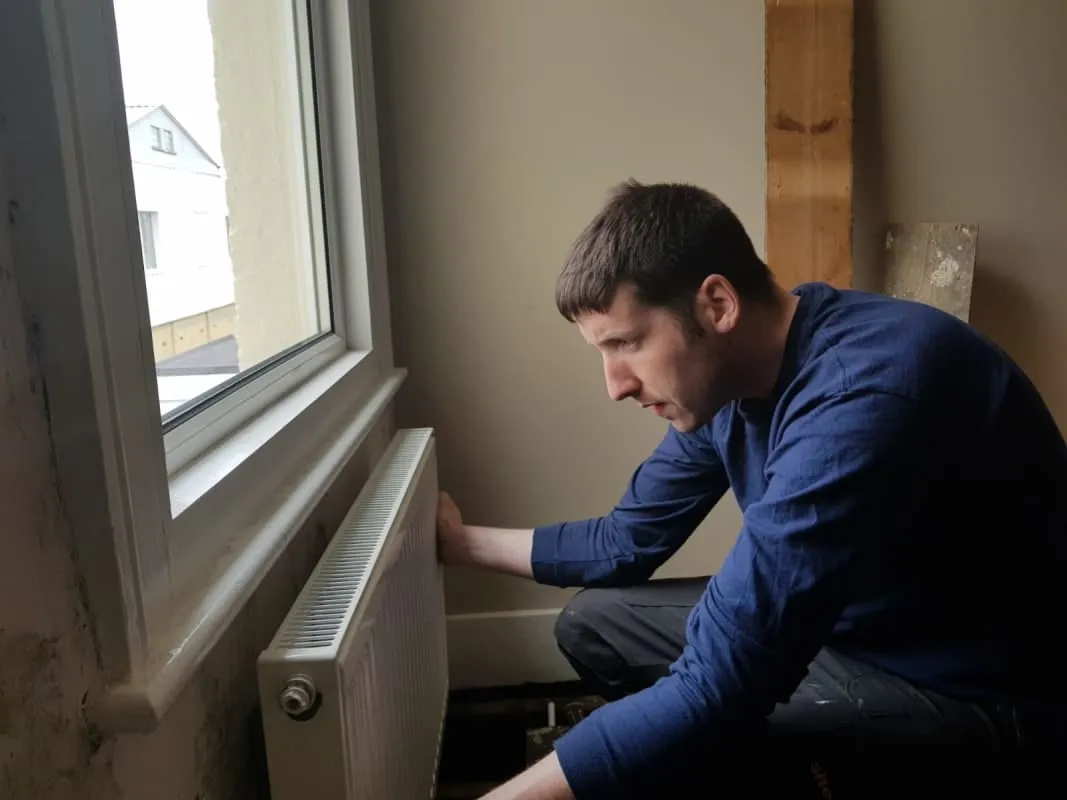
Radiator cold at the top or bottom? What it means
A radiator cold at the top has trapped air and needs bleeding. Cold at the bottom means sludge. Here is what each pattern tells you and how to fix it.
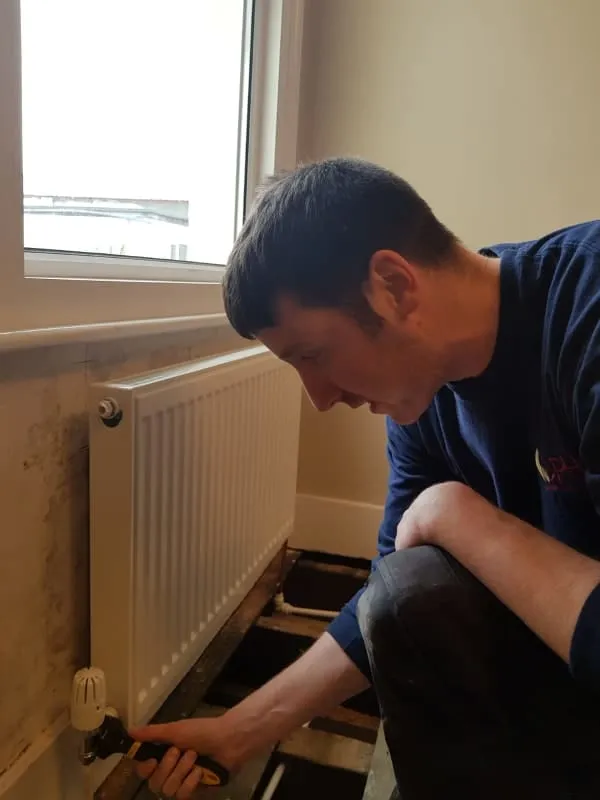
A radiator cold at the top but warm at the bottom almost always has trapped air, and bleeding it fixes the problem in a few minutes. A radiator that is warm at the top and cold at the bottom usually has sludge sitting in it, which needs flushing out rather than bleeding.
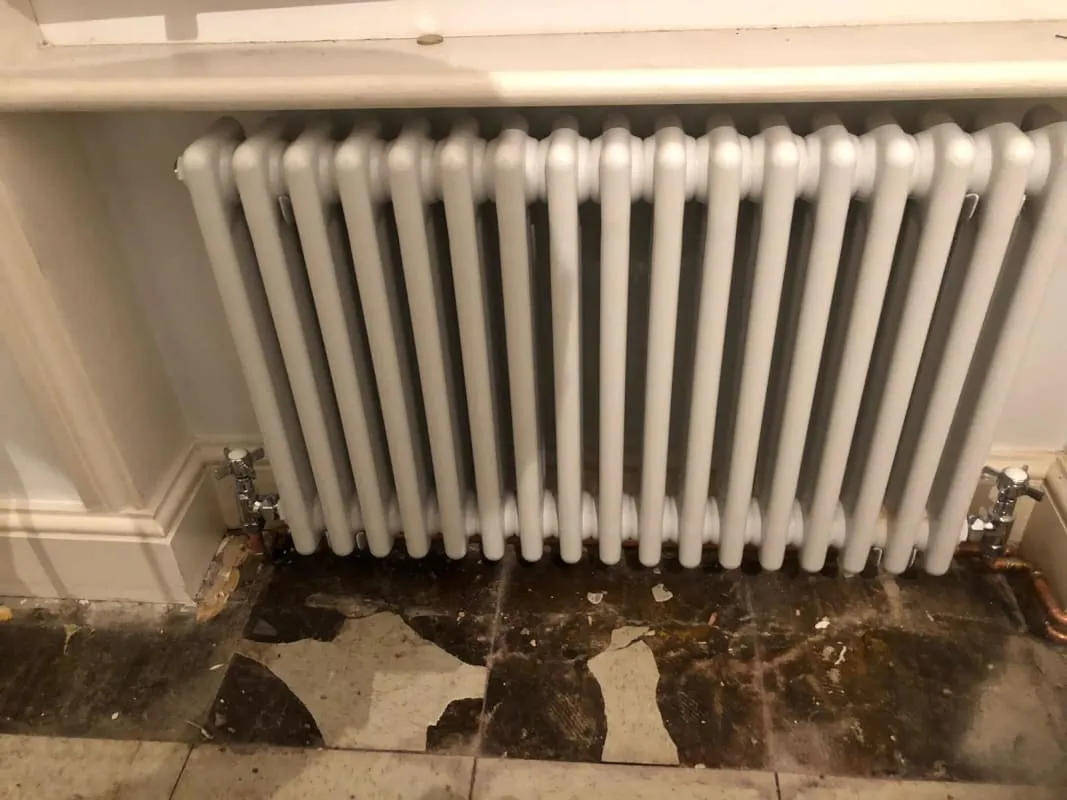
Where the cold patch sits tells you most of what you need to know. Run your hand over the radiator once the heating has been on for 20 minutes or so, then match what you feel to the sections below.
Quick guide to cold spots
| What you feel | Likely cause | First step |
|---|---|---|
| Cold at the top, warm below | Air in the radiator | Bleed it |
| Warm at the top, cold at the bottom | Sludge or debris | Flush or power flush |
| Cold in the middle | Sludge built up across the panel | Flush the radiator |
| Cold all over, others hot | Valve shut or stuck, or poor balancing | Check both valves |
| Upstairs radiators cold, downstairs hot | Air, low pressure or pump issue | Bleed, check pressure |
| Every radiator cold | Boiler, pump, programmer or pressure | Check the boiler display |
Radiator cold at the top: trapped air
Air rises, so it collects at the top of the radiator and stops hot water filling that space. You may also hear gurgling or trickling. Air gets into heating systems through small leaks, after work on the pipes, or from gases produced as the inside of the system slowly corrodes.
The fix is to bleed the radiator: let the air out through the small valve at one top corner until water appears. Our step-by-step guide on how to bleed a radiator covers it properly, including which radiators to do first. On a combi or system boiler, check the pressure gauge afterwards, as letting air out can drop it below 1 bar. If it does, top it back up to the level your manual gives.
If the same radiator needs bleeding every week or two, something is letting air in or creating it. That is worth getting looked at, because constant air usually means corrosion is going on inside the system.
Radiator cold at the bottom: sludge
Over the years, the steel inside radiators and pipes corrodes and forms a black, muddy sludge called magnetite. It is heavy, so it settles in the bottom of the radiator and blocks the flow of hot water through the lower part. Hard water, like London’s, adds limescale to the mix.
Signs of sludge include:
- Cold at the bottom or in the middle, warm at the top
- Black or dark brown water when you bleed
- Radiators taking a long time to warm up
- A kettling or banging sound from the boiler
Bleeding will not help here. A single radiator can sometimes be taken off and flushed out with a hose outside. If several radiators are affected, a power flush cleans the whole system at once, and fitting a magnetic filter afterwards catches new debris before it settles again.
Radiator cold all over
If one radiator stays stone cold while the rest are hot, the cause is normally at the valves rather than inside the radiator.
- Check the thermostatic valve (TRV). It is the numbered head on one side. Turn it to the highest number. If nothing changes, the pin underneath may be stuck. With the head unscrewed you will see a small metal pin; it should spring up and down when pressed. A pin stuck down keeps the valve shut.
- Check the lockshield valve on the other side. It sits under a plain plastic cap. If someone has turned it fully closed, no water will get through.
- Feel the pipes going into the radiator. If the pipe into one valve is hot and the radiator is cold, the blockage is at that valve or in the radiator itself.
Our post on thermostatic radiator valves explains how TRVs work and how to set them.
Balancing: when far radiators stay lukewarm
Water takes the easiest route. In an unbalanced system, the radiators nearest the boiler grab most of the hot water and the ones furthest away, often upstairs or at the back of the house, only get lukewarm. Balancing means adjusting the lockshield valves so each radiator gets its share. It takes patience and a thermometer, and it is a normal part of our central heating repair visits.
Airlocks
An airlock is a pocket of air trapped in the pipework rather than in a radiator, so bleeding the radiators does not clear it. It often shows up after a system has been drained, when several radiators on one run stay cold, or when the pipes make a constant trickling sound.
On a sealed system, bleeding each radiator in turn, topping up the pressure and running the heating can move small airlocks along to a radiator where they can be let out. Stubborn ones, and airlocks on older open-vented systems with a tank in the loft, usually need an engineer to clear them properly.
Pump problems
If the radiators nearest the boiler are hot and the rest are barely warm, or none of them heat up while the boiler fires, the circulating pump may be failing or seized. Do not open the boiler to check it. Note what the boiler display shows and call us.
When to call an engineer
- Bleeding has not helped, or the same radiator fills with air again quickly
- You get black water when you bleed
- Several radiators are cold at the bottom
- A radiator stays cold with both valves fully open
- No radiators heat up, or the boiler shows a fault code
Our radiators team can flush, repair or replace radiators and valves across South and South West London, including busy terraces in Clapham and Balham.
Call Lee on 020 8050 5913. If he can talk you through it, there is no charge, and if it needs a visit he will tell you what to expect before anyone comes out.
Stuck? Call Lee.
If you are not sure it is safe, stop and call. Advice by phone is free.
020 8050 5913