Limescale in your boiler: signs, damage and prevention
London's hard water leaves limescale in boilers, cylinders, showers and taps. Learn the signs of limescale in a boiler and the simple ways to prevent it.
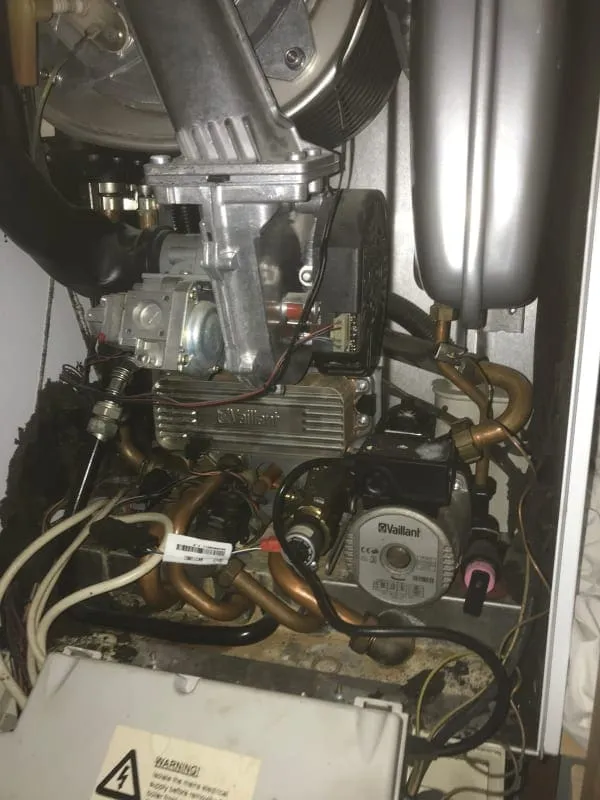
Limescale in a boiler shows up as a kettle-like rumbling or whistling, hot water that runs hot then cold, or a weak flow of hot water from a combi. London has hard water, so scale builds up on anything that heats water. A scale reducer, regular servicing and treating the heating water properly all help keep it under control.
Here is how limescale affects your boiler and the rest of your hot water system, and what you can do about it.
What is limescale?
Hard water carries dissolved minerals, mostly calcium and magnesium. When the water is heated, those minerals come out of the water and stick to hot surfaces as a hard white crust. That is limescale. You see it in your kettle, but the same thing happens inside your boiler, cylinder, shower and taps where you cannot see it.
Scale is a poor conductor of heat. A layer of it on a heat exchanger means the boiler has to work harder to heat the same amount of water, and the parts under the scale run hotter than they should.
Where limescale does damage
Combi boilers
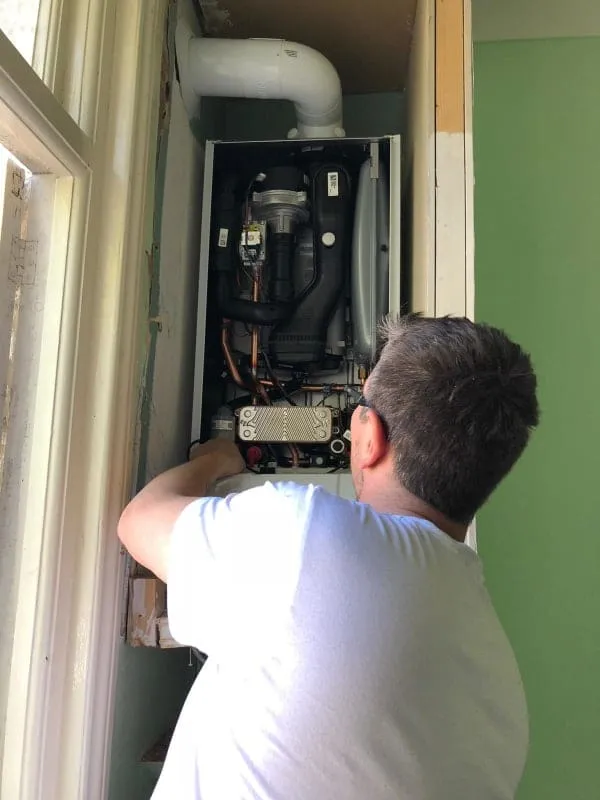
A combi heats fresh mains water every time you open a hot tap. That water passes through a small plate heat exchanger with narrow channels, which scale up easily. Signs include:
- Hot water that is weak, slow to warm, or swings between hot and cold
- The boiler cutting out on hot water but working fine on heating
- A rumbling or hissing when the hot tap is running
Heating systems and kettling
The water in a sealed heating system is not changed often, so it carries less fresh scale. But if the system keeps losing pressure and is topped up again and again, every top-up adds new hard water. Combined with sludge from corrosion, this can coat the main heat exchanger and cause kettling: a rumbling, banging or whistling sound like a kettle boiling. Our guide to boiler banging noises covers kettling and its other causes.
Hot water cylinders
Scale settles at the bottom of cylinders and builds up on the coil and on immersion heater elements. It can make the immersion fail early and slow down how quickly the cylinder heats.
Showers and taps
Shower heads clog, flow drops and thermostatic cartridges stick. Taps start to drip as scale damages washers and cartridges. Electric showers can scale up inside too.
How to prevent limescale in your boiler
- Fit a scale reducer. A scale reducer fitted on the cold supply to a combi boiler helps protect the plate heat exchanger. Building Regulations guidance in England expects some form of scale protection on new combi installations in hard water areas. The exact requirements can change, so we follow the current guidance on every install.
- Keep inhibitor in the heating system. Inhibitor is a chemical added to the heating water. Its main job is to stop corrosion and sludge, but it also helps limit scale. It should be checked at each service and topped up when needed.
- Fit a magnetic filter. A filter on the heating return catches sludge and debris before it reaches the boiler. A magnetic filter is cleaned as part of a service.
- Fix pressure loss. If you top up your boiler often, find the leak. Every top-up brings fresh hard water into the system. See boiler losing pressure.
- Service every year. An annual boiler service lets the engineer check the heat exchanger, the inhibitor level and the filter before problems grow.
- Descale what you can see. Soak shower heads and tap aerators in descaler or white vinegar every few months.
What about water softeners?
A whole-house water softener removes most hardness, which helps boilers, cylinders, showers and taps. There are a few things to know first:
- It is generally advised to keep at least one tap, usually the kitchen cold tap, on unsoftened mains water for drinking.
- Check with the boiler manufacturer before connecting softened water to the heating side, as some have specific rules about it.
- Softeners need salt and occasional maintenance.
We can advise on whether a softener makes sense for your home and how it should be plumbed in.
Can limescale be removed from a boiler?
Sometimes. A scaled plate heat exchanger on a combi can often be descaled or replaced. A heavily scaled or sludged heating system may benefit from a power flush or chemical clean, which clears the system and refills it with clean water and fresh inhibitor. Our article on whether a power flush is worth it explains when it helps and when it does not.
If the main heat exchanger is badly damaged and the boiler is old, replacement may make more sense. Our repair or replace guide can help you decide.
What does it cost?
Diagnosis and repair work is charged by the hour: £120 an hour including VAT (£100 + VAT) Monday to Friday, 8am to 5pm, and £180 an hour including VAT (£150 + VAT) at other times. Parts are at cost plus 20%. Our prices page has the full breakdown.
When to call an engineer
- The boiler is kettling, rumbling or banging
- Hot water runs hot and cold or the flow is weak
- You top up the boiler pressure regularly
- Your immersion heater has failed more than once
- You are having a new boiler fitted and want proper scale protection
Call Lee on 020 8050 5913 and describe the noise or the problem. He can often tell you over the phone whether it sounds like scale and what to do next, for free. To book, use our boiler servicing or boiler repair pages.
Stuck? Call Lee.
If you are not sure it is safe, stop and call. Advice by phone is free.
020 8050 5913