Unvented cylinder explained: how it works and care
An unvented cylinder gives mains-pressure hot water with no loft tank. How it works, what your home needs, its safety devices and what a dripping pipe means.
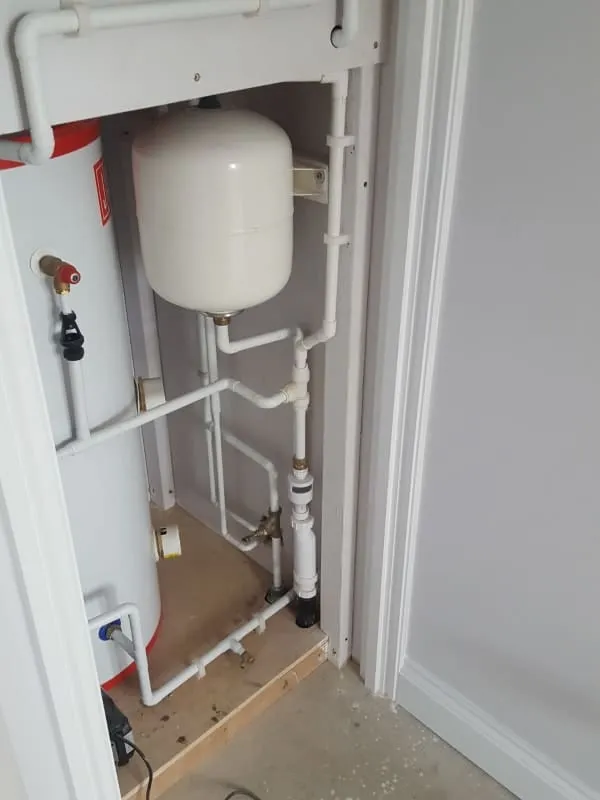
An unvented cylinder is a sealed hot water tank fed directly from the mains, so you get strong hot water at every tap and shower without a cold water tank in the loft. It suits homes with more than one bathroom and a good mains supply. Because it stores hot water under pressure, it has built-in safety devices, needs a qualified installer and should be checked every year.
Here is how it works, whether it suits your home, and what to do if you notice a pipe dripping.
How does an unvented cylinder work?
In a traditional vented system, a tank in the loft feeds cold water down to a hot water cylinder, and gravity provides the pressure. Showers upstairs are often weak.
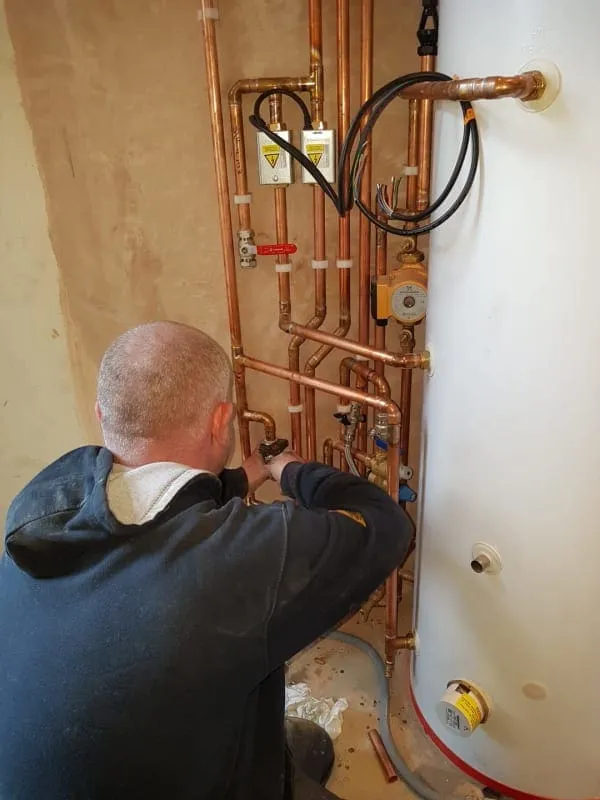
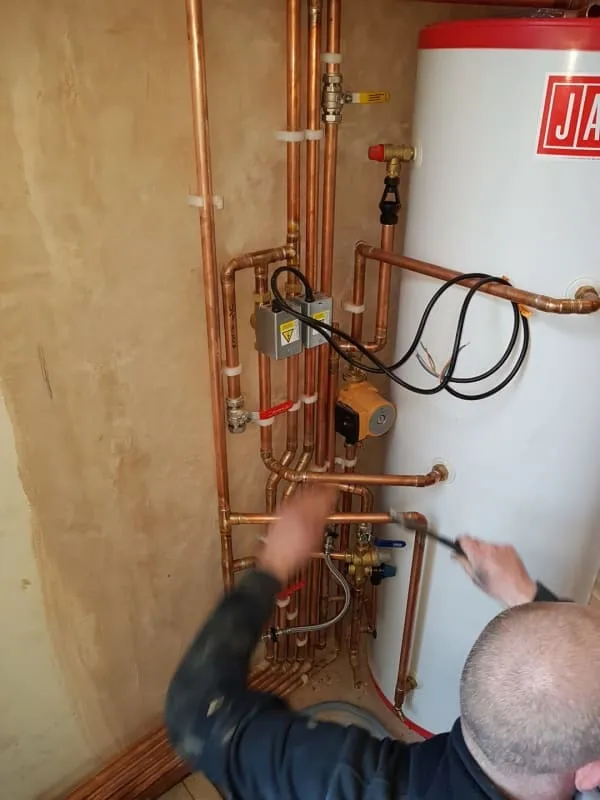
An unvented cylinder is connected straight to the cold mains. The water inside is heated by a coil from your boiler, by immersion heaters, or both, and stays at mains pressure. When you open a tap, mains pressure pushes the hot water out.
Water expands when it heats. In a sealed system that expansion has to go somewhere, so an unvented cylinder has either an expansion vessel or an internal air bubble to take up the extra volume.
Benefits of an unvented cylinder
- Mains-pressure hot water at every tap and shower, including upstairs
- Several outlets at once. Good for homes with two or more bathrooms, where a combi might struggle
- No loft tanks. Frees up loft space and removes the risk of a loft tank freezing or leaking
- Quieter. No filling noises from tanks in the loft
- Can be fitted almost anywhere, such as an airing cupboard, utility room or kitchen cupboard
If you are deciding between a combi and a cylinder, our guide to combi vs system vs regular boilers explains the options.
What your home needs
An unvented cylinder can only deliver what the mains can supply. Before recommending one, we check two things:
- Mains pressure: the force of the water coming in.
- Flow rate: how much water comes through in a given time.
Each cylinder manufacturer sets its own minimums, so we test your supply and compare it with the model we are proposing. If your incoming supply is weak or uses an old lead pipe, a new supply pipe may be needed first. See low water pressure and our water mains and pipework service.
You also need somewhere for the safety discharge pipe to run to a safe, visible outlet, usually outside.
Who can fit an unvented cylinder?
Unvented hot water systems are covered by Building Regulations in England (Part G). The installer should hold an unvented hot water qualification, often called G3, and the installation must be notified to building control. Keep the paperwork, as you may need it when you sell your home. For the current rules, check GOV.UK.
The safety devices on an unvented cylinder
Because it stores hot water under pressure, an unvented cylinder has several layers of protection.
| Device | What it does |
|---|---|
| Pressure reducing valve | Keeps incoming mains pressure at a steady, safe level |
| Expansion vessel or air bubble | Takes up the extra volume as water heats |
| Expansion relief valve | Opens if pressure rises too far, for example if the expansion vessel has failed |
| Temperature and pressure relief valve | Opens if the water gets too hot or the pressure too high |
| Thermostats and high-limit cut-outs | Switch off the heat source if the water overheats |
| Tundish and discharge pipe | A visible air gap and pipe that safely carry away any water released by the valves |
The tundish is a small funnel, usually near the cylinder, with a gap you can see through. It lets you see if water is being discharged.
Water dripping from the discharge pipe or tundish
Water in the tundish, or dripping from the discharge pipe outside, means one of the relief valves is opening. It is a sign something needs attention.
- Cold water dripping: often the expansion vessel has lost its air charge, or a relief valve is worn or has debris in its seat. Not usually an emergency, but book a visit soon.
- Hot water or steam discharging: this is more serious. It can mean the water is overheating. Turn off the boiler and any immersion heater, and call an engineer straight away. Do not touch the discharge pipe, as it can be very hot.
Do not block, cap or redirect the discharge pipe to stop the drip. It is there for safety.
The annual check
Manufacturers usually require an annual service to keep the warranty valid, and it is the best way to keep the safety devices working. A typical check includes:
- Checking and recharging the expansion vessel
- Testing the relief valves manually
- Cleaning the inlet strainer
- Checking the pressure reducing valve setting
- Checking the discharge pipe and tundish
- Checking thermostats and cut-outs
We can do this alongside your yearly boiler service, saving a separate visit.
What does it cost?
We give a free written quote for supplying and fitting a new unvented cylinder, as every home is different. Repairs and annual checks are charged at £120 an hour including VAT (£100 + VAT) Monday to Friday, 8am to 5pm, and £180 an hour including VAT (£150 + VAT) at other times. See our prices page.
When to call an engineer
- Hot water or steam is coming out of the tundish or discharge pipe
- Cold water drips from the discharge pipe
- Hot water pressure has dropped
- You have no hot water from the cylinder
- It is more than a year since the cylinder was last checked
Call Lee on 020 8050 5913 for free advice over the phone. To get a quote for a new cylinder or book a check, visit our hot water cylinders page.
Stuck? Call Lee.
If you are not sure it is safe, stop and call. Advice by phone is free.
020 8050 5913