Heat pump vs gas boiler: an honest London guide
Heat pump vs gas boiler for London homes: space, radiators, insulation, flats, noise and planning, when a heat pump suits and how to get your home ready.
A heat pump can heat a London home well, but only if the house has the space, the insulation and radiators sized for lower water temperatures. A gas boiler is smaller, cheaper to fit and works with almost any existing system. In choosing between a heat pump vs gas boiler, the honest answer depends far more on your house than on the technology.
Here is how the two compare in the kinds of homes we work in across South and South West London and north Surrey.
How each one heats your home
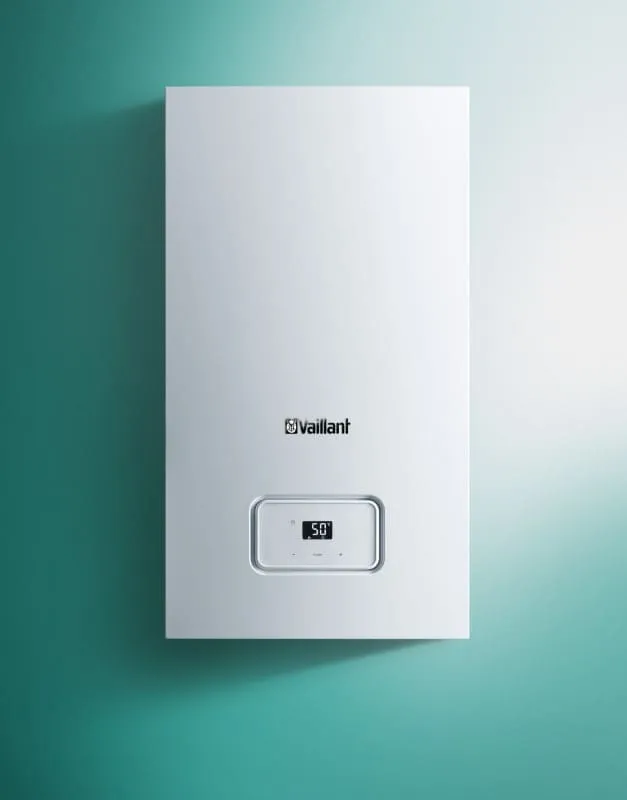
A gas boiler burns gas to heat water, usually to a high temperature, and sends it round your radiators. A combi heats hot water on demand, so you need no cylinder.
An air source heat pump sits outside and moves heat from the outside air into your heating water, using electricity to run a compressor. It produces several units of heat for each unit of electricity, but it works best at lower water temperatures than a boiler. That one fact drives most of the differences below.
Heat pump vs gas boiler side by side
| Gas boiler | Air source heat pump | |
|---|---|---|
| Space | Fits in a kitchen cupboard | Outdoor unit plus, in most homes, a hot water cylinder indoors |
| Water temperature | High, heats rooms quickly | Lower, heats steadily over longer periods |
| Radiators | Existing radiators usually fine | Some may need upsizing |
| Insulation | Copes with draughty homes | Works best in a well-insulated home |
| Hot water | On demand with a combi | Stored in a cylinder |
| Noise | Quiet, indoors | Outdoor fan and compressor, positioning matters |
| Planning | Not normally needed | Often permitted development, with conditions |
| Carbon | Burns fossil fuel | Much lower, especially as the grid gets cleaner |
| Install cost | Lower | Higher, though grants may help |
Space: the outdoor unit and the cylinder
An air source heat pump needs an outdoor spot with good airflow, usually on the ground at the side or rear of the house. In a terraced street in Battersea or Brixton, a narrow side return or small garden may still work, but a front garden or a basement lightwell often will not.
You will also need room inside for a hot water cylinder, usually larger than an old-style tank. If you swapped to a combi years ago and took the airing cupboard out, finding space again is part of the job. Our guide to the unvented cylinder explains how these work.
Radiators and insulation
Because a heat pump runs cooler water, each radiator gives out less heat than it would on a boiler. In a well-insulated room that is fine. In a room with solid walls, single glazing or a draughty floor, the radiator may need to be bigger, or the room needs better insulation first.
A room-by-room heat loss calculation tells you which radiators are big enough. Doing that before you commit to anything is the single most useful step.
Flats
Flats are the hardest case. You may have no outdoor space, and you will usually need the freeholder’s consent and possibly planning permission to fix a unit to the building. Mansion blocks in Clapham or conversion flats with shared walls also raise noise questions. Some flats can use a heat pump on a balcony or flat roof, but many are better served by a modern, well set up gas boiler for now.
Noise and planning
Modern heat pumps are quieter than many people expect, but the outdoor unit does make a steady hum and fan noise. Placing it away from bedroom windows and your neighbour’s windows matters.
In England, many air source heat pumps on houses count as permitted development, but only when they meet conditions on size, siting and noise. Those rules have changed in recent years. Listed buildings, conservation areas and flats are different. Check the current rules with your local council or the Planning Portal before you buy.
When a heat pump suits
A heat pump is usually a good fit if most of these are true:
- You own a house with outdoor space for the unit
- The loft and cavity walls are insulated and the windows are double glazed
- You have, or can make, room for a cylinder
- Your radiators are reasonably large, or you are happy to upsize some
- You are comfortable with heating that runs steadily rather than in short blasts
- You plan to stay in the home for some years
When a gas boiler still makes sense
A new gas boiler is still the practical choice for many London homes, particularly flats, small terraces with no outdoor space, and homes where insulation work is not yet possible. If your boiler is failing now and you are not ready for a heat pump, a modern condensing boiler set up at a lower flow temperature is efficient and buys you time. See our guide on whether to repair or replace your boiler.
Getting your home ready
Even if a heat pump is a few years away, you can prepare now, and every step also makes a gas boiler cheaper to run:
- Improve insulation in the loft, walls and floors where you can.
- Upsize key radiators when you redecorate a room.
- Keep or plan cylinder space rather than removing an airing cupboard.
- Run your boiler at a lower flow temperature to see how the house copes.
- Clean the system. Sludge hurts any heat source; a power flush or filter helps.
Grants may be available through the Boiler Upgrade Scheme, which is applied for through an MCS-certified installer.
When to talk to an engineer
- Your boiler is getting old and you want to know whether to wait for a heat pump
- You want an opinion on whether your radiators and pipework are suitable
- You need cylinder space or radiator upgrades planned in
We give independent heat pump advice and carry out the preparatory heating work: radiators, pipework, cylinders and controls. Call Lee on 020 8050 5913 for a straight answer about your home, or ask for a free written quote for planned work.
Stuck? Call Lee.
If you are not sure it is safe, stop and call. Advice by phone is free.
020 8050 5913