Damp patch on ceiling? Leak or condensation
A damp patch on the ceiling is usually a leak from the room above or condensation. How to tell which, what to check first and when to turn off the water.
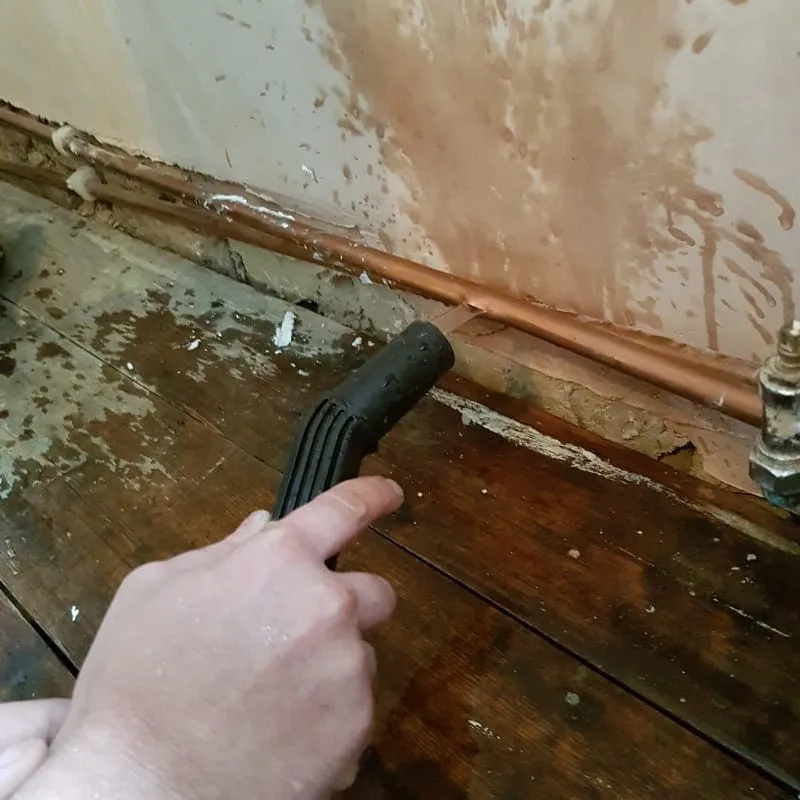
A damp patch on the ceiling is almost always one of two things: a slow leak from the room or pipes above, or condensation forming on a cold ceiling. A patch with a defined brown or yellow edge that grows after someone showers upstairs is a leak; a spread of small grey spots in a steamy bathroom is usually condensation.
The good news is that you can narrow it down yourself in half an hour, and catching a leak early saves a ceiling. Here is how.
Damp patch on ceiling: leak or condensation?
Look closely at the patch and think about when it appears.
| Sign | Probably a leak | Probably condensation |
|---|---|---|
| Shape | One patch with a clear tide mark | Spread out, often in corners or over the shower |
| Colour | Yellow or brown ring | Grey or black mould spots |
| Timing | Gets worse after the bath, shower or toilet above is used | Worse in winter, after cooking or showering in that room |
| Feel | Soft, bubbling paint or sagging plaster | Surface damp, wipes off |
| Location | Below a bathroom, kitchen, tank or pipe run | Bathroom or kitchen ceiling itself |
If you are on the top floor, a roof leak or blocked gutter is also possible, especially after heavy rain. That is a job for a roofer rather than a plumber.
If water is dripping through: do this first
- Keep away from light fittings. If water is coming through or near a ceiling light, switch the electricity off at the consumer unit and do not touch the fitting.
- Turn off the water at the stopcock. If you are not sure where it is, our guide to finding your stopcock will help.
- Catch the water with a bucket and move furniture and rugs out of the way.
- Ease the pressure on a bulging ceiling. If the plaster is sagging with water, and the electricity to that area is off, standing well back and making a small hole in the lowest point with a screwdriver lets it drain into a bucket in a controlled way. Do not stand directly underneath, and if you are not comfortable doing it, leave it and wait for us.
- Call us. Our emergency plumber service runs 24/7, 365 days a year.
Check the room above
Most damp patches sit directly below a bathroom. Go upstairs and work through these.
Shower and bath seals
The silicone seal around a shower tray or bath is the most common cause. Look for gaps, black mould lines or sealant that has come away from the tile. Water running off a shower screen or a bath edge finds those gaps and soaks into the floor. A simple test: run the shower for a few minutes without anyone in it, aiming at the tray only, then check the ceiling below. If the patch stays dry, splash the walls and seal edges and check again.
Grout
Cracked or missing grout on a shower wall lets water behind the tiles. It can travel some distance before it shows on the ceiling below.
The toilet
Check around the base of the toilet for damp, and feel the pipes behind it. A leaking pan connector, a weeping cistern bolt or a loose fill valve connection can drip only when the toilet is flushed. We can repair or replace any of these parts.
Waste pipes and traps
Under the basin and bath, look at the trap and waste joints. They often leak only while water is draining, which is why they go unnoticed for months.
Radiator valves and heating pipes
A radiator valve that weeps a little at the gland nut can soak into the floorboards over weeks. If you have a combi boiler and the pressure keeps dropping, that is a strong sign the leak is on the heating side rather than the water supply.
Supply pipes under the floor
If none of the visible fittings are wet, the leak may be on a pipe joint under the floorboards. One way to check is to turn off every tap and appliance and watch your water meter. If it is still moving, water is escaping somewhere.
What condensation needs instead
If it is condensation, a plumber will not cure it. Improve ventilation with an extractor fan that actually runs long enough, keep the heating on at a steady low level in cold weather, wipe down surfaces after showers, and treat mould with a suitable cleaner. A cold spot on the ceiling can also mean missing loft insulation above it.
Hidden leaks: why tracing matters
Some leaks are hard to find because water runs along a joist or pipe before it drips. Lifting boards at random or cutting holes in the ceiling causes more damage than it solves. Our leak detection service uses tracing equipment to find the source first, so we only open up what we need to.
If your insurer is involved, a written note of where the leak was and what caused it often helps with the claim.
When to call an engineer
- Water is dripping, or the ceiling is bulging or soft
- The patch keeps growing after you have checked the obvious seals
- Your boiler pressure keeps dropping
- The water meter moves with everything turned off
- You cannot find the source and do not want to start cutting holes
Drying out and repair
Once the leak is fixed, give the ceiling time to dry fully before you repaint, ideally a few weeks with good ventilation. Paint over damp plaster and the stain often comes back. Use a stain-blocking primer first.
We cover homes across South and South West London and north Surrey, from Clapham and Balham out to Sutton and Kingston. Call Lee on 020 8050 5913 and describe the patch. If he can talk you through finding the cause, there is no charge. If you need us to trace it, you can see our hourly rates on the prices page.
Stuck? Call Lee.
If you are not sure it is safe, stop and call. Advice by phone is free.
020 8050 5913