Boiler flow temperature: should you turn it down?
Lowering your boiler flow temperature can help a condensing boiler run more efficiently. How to adjust it safely on a combi, and when you should leave it alone.
Your boiler flow temperature is how hot the water is when it leaves the boiler and heads to your radiators. Many boilers are set higher than they need to be. On a modern condensing combi, turning the heating flow temperature down can help the boiler run more efficiently, and it is a dial you can change yourself in a minute and change back if your home does not stay warm enough.
What is boiler flow temperature?
Your boiler heats water and pumps it round the radiators. The water leaving the boiler is the flow. The water coming back, cooler after giving off its heat, is the return.
The flow temperature is not the same as the temperature of your rooms. The room thermostat decides when the heating is on. The flow temperature decides how hot the radiators get while it is on.
On a combi boiler there are usually two settings:
- Central heating, often a radiator symbol, which sets the flow temperature to the radiators
- Hot water, often a tap symbol, which sets how hot the water is at your taps
These are separate, and you can change one without the other.
Why lowering it can help a condensing boiler
Almost every gas boiler fitted in the UK in recent years is a condensing boiler. It is designed to recover extra heat from its exhaust gases by cooling them until the water vapour in them condenses. That is where the water in your condensate pipe comes from.
The catch is that condensing only happens properly when the return water coming back to the boiler is cool enough, generally below about 55°C. If the flow is set very high, the return water comes back too hot, the boiler does not condense much, and more heat goes out of the flue.
Turning the flow temperature down makes the radiators a bit cooler to the touch, but they run for longer and the boiler spends more of its time condensing. How much difference it makes depends on your home, your radiators and how the boiler is set up, so we will not put a number on it. The Energy Saving Trust and other official sources publish current guidance if you want to read more.
How to lower the flow temperature on a combi
This is a safe adjustment you make on the outside controls. You never need to open the boiler casing.
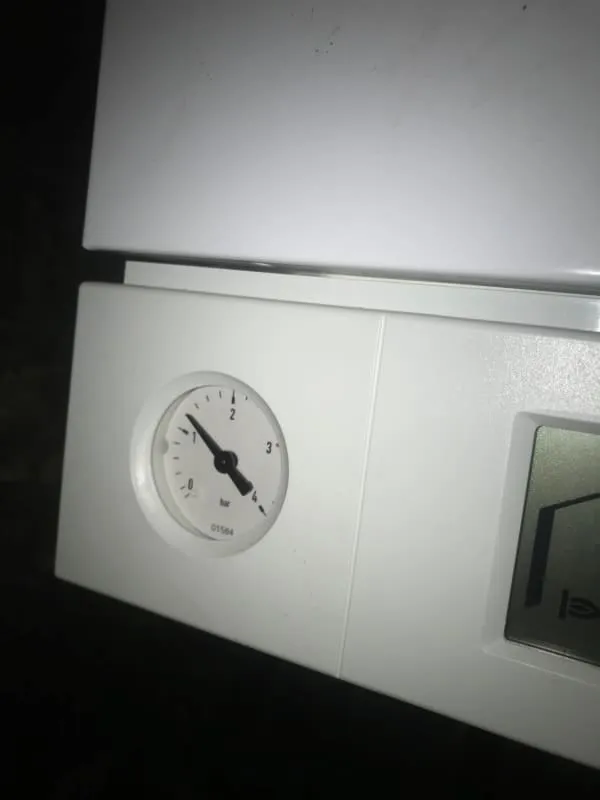
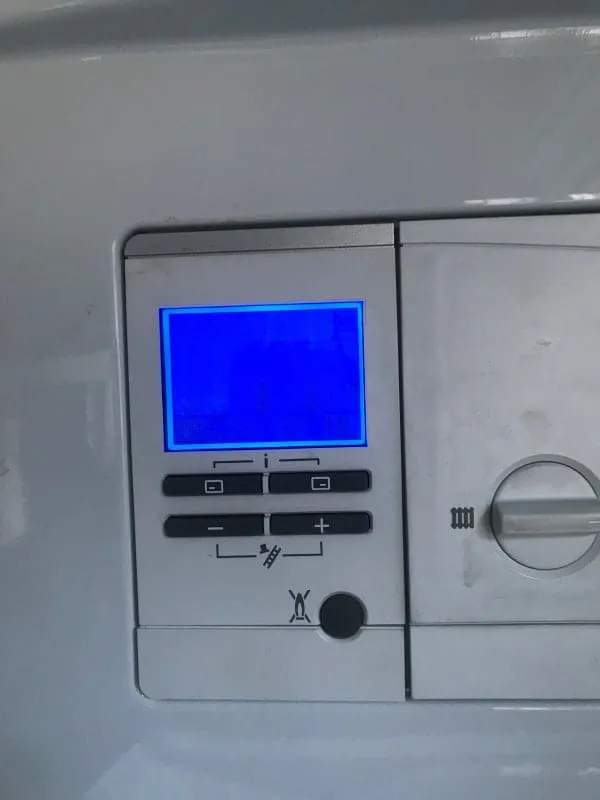
- Find the heating control. It is either a dial with a radiator symbol or a setting on the display. Check your boiler manual if you are not sure. Many manuals are available on the manufacturer’s website.
- Note the current setting. Take a photo so you can always go back.
- Turn the heating flow down to around 60°C as a starting point. Some boilers show numbers, others show a scale without temperatures. The manual will tell you what each step means.
- Leave the hot water setting alone for now.
- Live with it for a few days, ideally in cold weather. Rooms will take a little longer to warm up. That is normal.
- If the house stays comfortable, you can try going a little lower. If it does not reach temperature on cold days, turn it back up a step.
If your heating is controlled by a smart thermostat or a weather compensation sensor, the boiler may be setting the flow temperature automatically. In that case, the dial may work differently. Check with the controls’ instructions first, or ask us.
Hot water vs heating settings
The hot water setting on a combi is separate. Combis heat water on demand rather than storing it, so the risk of bacteria growing in stored water does not apply in the same way. Setting the hot water somewhere comfortable for washing, rather than at maximum, also means less scalding risk at the tap.
In London’s hard water, very hot water also tends to leave more limescale in the boiler’s hot water side. That is another reason not to run it at maximum without a reason.
If you have a system or regular boiler with a hot water cylinder, things are different. Stored hot water needs to be kept hot enough to control legionella bacteria. HSE guidance covers this and is the place to check current figures. Do not lower the flow temperature on a boiler that heats a cylinder without checking that the cylinder will still reach a safe temperature. If you are unsure which type of boiler you have, see combi vs system vs regular boiler.
When not to lower the flow temperature
Turning it down is not right for every home. Leave it as it is, or ask an engineer first, if:
- Your boiler heats a hot water cylinder through the same flow, as above
- Your house does not reach temperature in cold weather after lowering it
- Your radiators are small for the rooms, which is common in older homes and extensions
- Someone vulnerable lives with you, such as an elderly relative or a baby, and a cold home is a risk
- The boiler is not a condensing boiler. Older non-condensing boilers can be damaged by running too cool
- Your heating has problems already, such as cold radiators or sludge. Fix those first
If radiators struggle at a lower temperature, the system may need bleeding, balancing or cleaning. Our guide to getting your heating ready for winter covers the basics.
Can an engineer set it up properly?
Yes. At an annual service, an engineer can check the flow and return temperatures, look at the size of your radiators, and set the boiler up to suit your home. Some boilers also support weather compensation, which adjusts the flow temperature automatically depending on the outside temperature, or controls that talk to the boiler directly. We can advise on those through our smart heating controls service. Ask about it when you book a boiler service.
When to call an engineer
- You have lowered the flow temperature and some rooms are now cold
- You cannot find the setting or the display shows a fault
- You have a cylinder and are not sure what is safe
- Your boiler keeps cycling on and off rapidly
- Radiators were uneven before you changed anything
Call Lee on 020 8050 5913 if you would like to talk it through before changing anything. It costs nothing to ask, and he can usually tell you over the phone whether turning the flow temperature down makes sense for your boiler.
Stuck? Call Lee.
If you are not sure it is safe, stop and call. Advice by phone is free.
020 8050 5913