Electric shower vs mixer shower: which is right for you?
Electric shower vs mixer shower compared. How each one works, which suits your hot water system, what flow to expect and what installing each one involves.
The choice between an electric shower and a mixer shower mostly comes down to your hot water system. An electric shower heats its own water, so it works anywhere with a cold mains supply and a suitable electrical circuit. A mixer shower blends hot and cold water you already have, so it needs a system that can deliver enough hot water at a good pressure. Get that match right and either can give you a shower you are happy with.
Here is how each works, which homes they suit, and what fitting one involves.
How an electric shower works
An electric shower is a self-contained unit on the wall. Cold water from the mains goes in, passes over a heating element inside the unit, and comes out of the head at the temperature you set. It does not use your boiler or hot water cylinder at all.
Good points
- Hot water whenever you want it, even if the boiler is off or the cylinder is empty
- Works with any type of boiler or hot water system
- A useful second shower, for example in an en suite, so it does not compete with the main bathroom
Limits
- The flow is limited by how much water the element can heat. In winter, when the incoming water is colder, the shower may run at a lower flow to reach the same temperature.
- It needs its own dedicated electrical circuit, sized for the shower’s power rating.
- Units can scale up in hard water, and London’s water is hard.
- The bulky unit on the wall is less sleek than a mixer.
How a mixer shower works
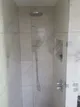
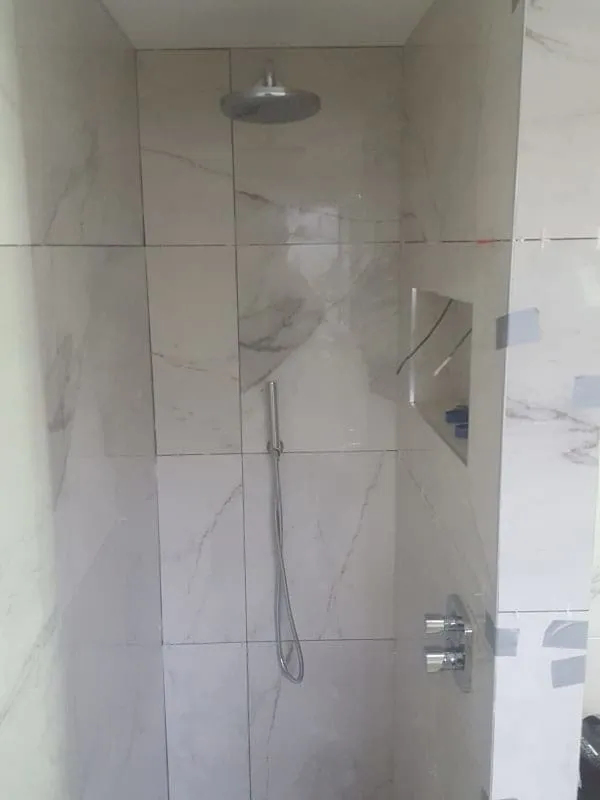
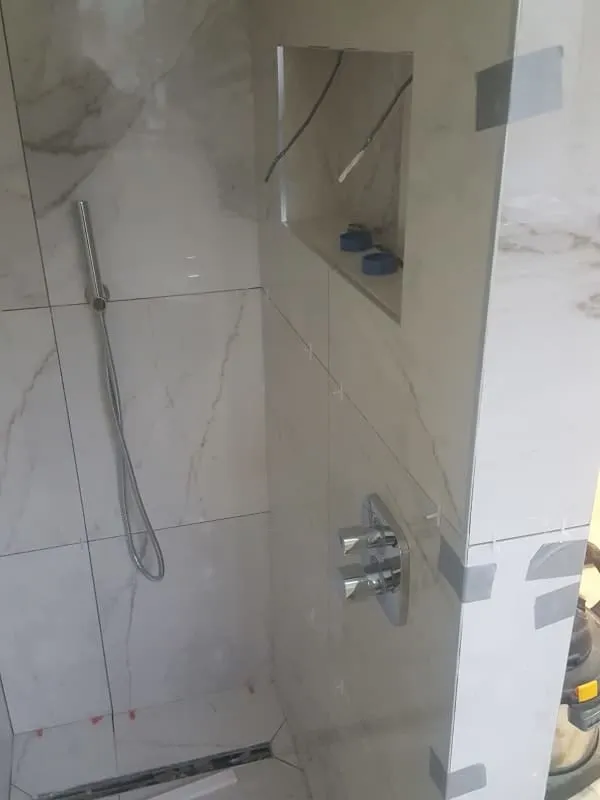
A mixer shower takes hot water from your existing system and cold water, then blends them in a valve. Most modern mixers are thermostatic, which means they hold a steady temperature even if someone turns on a tap elsewhere. The valve can be exposed on the wall or concealed behind the tiles with just the controls showing.
Good points
- Flow can be much stronger, depending on your system, which makes rainfall heads and body jets possible
- A neater look, especially with a concealed valve
- No high-power electrical circuit needed for the shower itself
Limits
- It depends entirely on your hot water. If the cylinder runs out or the boiler breaks down, the shower goes cold.
- A gravity-fed system may need a pump to give good pressure.
- With a combi boiler, flow is limited by the combi’s output and drops if another hot tap is used at the same time.
Electric shower vs mixer shower: which suits your system?
| Your hot water system | Electric shower | Mixer shower |
|---|---|---|
| Combi boiler | Works well, especially as a second shower | Works well if the combi’s hot water output suits the shower head |
| Gravity-fed cylinder with loft tank | Works well, and gives better pressure than an unpumped mixer in many homes | Works, but often needs a shower pump for good pressure |
| Unvented cylinder | Works, but rarely needed | Usually the best match, with strong mains pressure flow |
| No boiler, or boiler often unreliable | A strong option | Not suitable on its own |
If you are not sure what you have, our guides to combi vs system vs regular boilers and unvented cylinders will help you tell.
What about flow?
How a shower feels is mostly about flow, the amount of water per minute, rather than pressure alone.
- Electric showers give a moderate, steady flow. It is limited by the unit’s power, so a higher-rated model gives a bit more, but it will never feel like a powerful rainfall head.
- Mixer showers on an unvented cylinder or a well-pumped gravity system can give a much stronger flow.
- Mixer showers on a combi sit in between and depend on the boiler model and your mains supply.
If your current shower is weak, it may not be the type of shower at all. Our guide to low shower pressure covers the common causes.
Running considerations
We are not going to give you figures here, because what each type costs to run depends on your energy tariffs, how long and how often people shower, and how efficient your boiler or cylinder is. A few general points hold:
- An electric shower uses electricity only while it runs, and only heats the water you use.
- A mixer shower uses hot water heated by gas or electricity in your boiler or cylinder. With a stored hot water system, some heat is also lost from the cylinder between uses.
- Shorter showers and a sensible flow rate reduce running costs for either type.
For up-to-date guidance on comparing energy use, the Energy Saving Trust publishes independent advice.
What installation involves
Fitting an electric shower
- A cold mains water supply to the shower position
- A dedicated circuit from the consumer unit, with the right cable size, an isolating switch and RCD protection. This is electrical work that needs a qualified electrician and must meet Building Regulations, so check the current requirements on GOV.UK.
- Replacing an existing electric shower like for like is often straightforward. Fitting a higher-powered unit can mean upgrading the cable.
Fitting a mixer shower
- Hot and cold supplies to the valve, at balanced pressures where the valve needs it
- For a concealed valve, chasing the pipes into the wall and retiling around it
- Possibly a shower pump on a gravity-fed system, which also needs an electrical supply
- On a combi or unvented system, checking that the flow and pressure suit the shower you want
Many people choose a mixer as part of a full bathroom refit, when walls are being tiled anyway. Our bathroom installation service covers that.
When to call an engineer
- You want to swap from one type to the other
- You are not sure whether your system can support a mixer or a powerful rainfall head
- You want a pump added to a gravity-fed shower
- An existing shower is leaking, scalding or running cold
We install showers through our shower installation service across South and South West London and north Surrey, and we give free written quotes for bathroom work. Call Lee on 020 8050 5913 to talk through your options, free of charge.
Stuck? Call Lee.
If you are not sure it is safe, stop and call. Advice by phone is free.
020 8050 5913