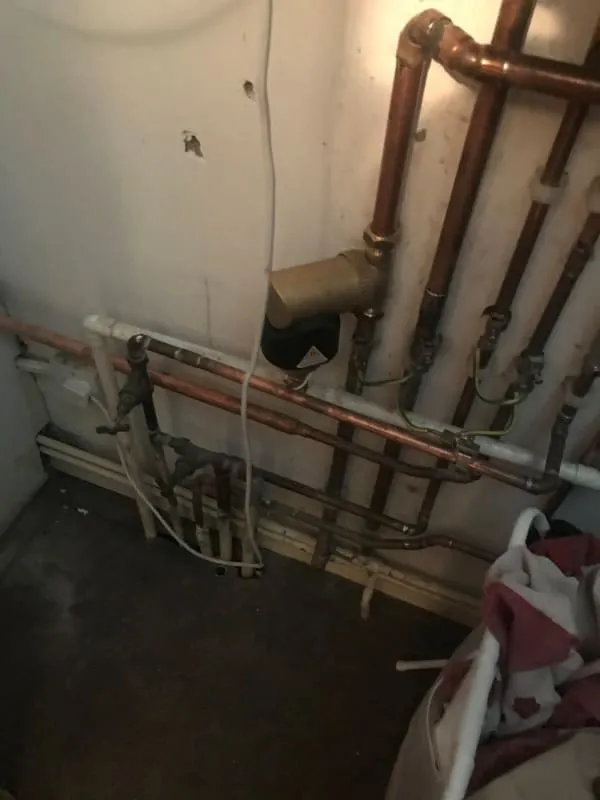
Where is my stopcock? How to find and turn it off
Where is my stopcock? In most London homes it is under the kitchen sink. Here is where else to look, how to turn it off and what to do if it is stuck.
In most London houses the stopcock is under the kitchen sink, on the cold pipe where the water supply comes up through the floor. Turn it clockwise to shut the water off. If it is not there, check the places below, and once you have found it, label it so nobody has to hunt for it during a leak.
Knowing where your stopcock is turns a burst pipe from a flood into a mop-up. It is the first thing Lee asks when someone calls with water pouring through a ceiling.
What is a stopcock?
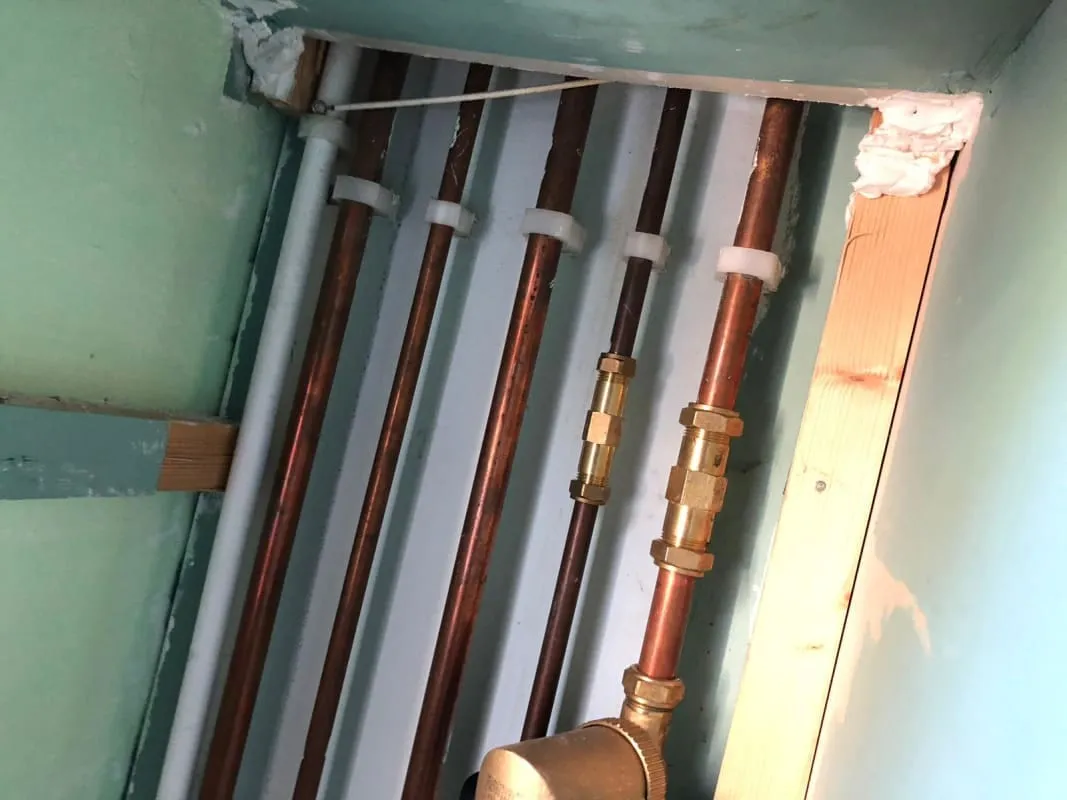
The stopcock, also called the internal stop tap or stop valve, controls the mains cold water coming into your home. Closing it stops water flowing to the taps, toilets, the boiler and any cold water tank. It does not drain water already in the pipes, tanks or cylinder, so some water may still run for a while after you close it.
It is usually a brass valve with a round or T-shaped handle, or a lever on newer installations.
Where is my stopcock? The usual places
Start with the first place on this list and work down.
- Under the kitchen sink. By far the most common spot. Look at the back of the cupboard for a pipe coming up through the floor.
- Where the supply pipe enters the house. Often near the front of the house, as the supply usually comes from the street. Check the hallway, under the stairs, or in a downstairs cloakroom.
- In a cellar or basement. Common in Victorian terraces, close to the front wall.
- Under the floorboards. Some older homes have it under a small hatch or a loose board near the front door or kitchen.
- In the airing cupboard or utility room. Sometimes, especially where the kitchen has been moved or refitted.
- In a garage. Common in newer houses on estates.
If you rent, ask your landlord or letting agent. They should know, and it is worth asking before you need it.
Stopcocks in flats
Flats are trickier, because the supply may be shared or run through communal areas.
- Check under the kitchen sink first, then the bathroom, airing cupboard and any boiler cupboard.
- Look behind the bath panel. In many purpose-built flats the stopcock is there.
- In converted Victorian houses split into flats, your stopcock could be in your flat, in a shared hallway, or even in another flat’s space.
- In blocks, there may be a valve in a riser cupboard in the communal corridor. The managing agent or caretaker should know.
If you live in a flat in an area like Clapham or Wandsworth, where many houses have been converted, it is well worth finding out now rather than knocking on doors during a leak.
How to turn off your stopcock
- Turn the handle clockwise (to the right) until it stops. On a lever valve, turn the lever so it sits across the pipe rather than along it.
- Do not force it. Firm pressure is fine, but if it will not move, stop. See the next section.
- Check it has worked. Turn on the cold tap in the kitchen. The flow should slow and stop once the pipe empties.
- Turn off the heating and hot water if you have a leak, so the boiler is not running without water.
- To turn it back on, open it anticlockwise slowly until fully open, then turn it back a quarter turn. That stops it seizing in the fully open position.
What if my stopcock is stuck?
Stopcocks that have not been touched for years often seize with limescale and corrosion, especially with London’s hard water.
- Try gripping the handle with a cloth for a better hold and use steady pressure.
- A little penetrating spray on the spindle, left for a few minutes, can help.
- Do not use a long wrench or hammer on it. You can snap the spindle or crack the valve body, and then you have a leak you cannot stop.
If it will not budge in an emergency, use the outside stop valve (below) or call us. If it is stuck when there is no emergency, get it replaced. A new stopcock is a short job and gives you peace of mind. Our general plumbing service covers it.
The outside stop valve
There is usually a second valve outside, under a small metal or plastic cover in the pavement or front path near your boundary. This normally belongs to your water company and is often shared or hard to reach without a special key.
In a real emergency where you cannot shut off the water inside, call your water company. They can advise or send someone. Some homeowners do use the outside valve themselves, but check with your water company first, as rules and ownership vary and some covers serve more than one property. Our guide to lead water pipes explains who usually owns which part of the supply.
Label it now
Once you have found it:
- Tie a bright tag or label on it saying “Stopcock: turn clockwise to close”.
- Clear the cupboard so you can reach it quickly.
- Show everyone in the house, including teenagers and lodgers.
- Turn it off and on once a year to keep it moving.
- Save Lee’s number, 020 8050 5913, somewhere easy to find.
When to call an engineer
- You cannot find your stopcock at all
- It is seized or leaking from the spindle
- You have turned it off but water is still pouring out
- A pipe has burst or there is water through a ceiling
- You want the stopcock moved somewhere easier to reach
If you are dealing with a leak right now, our emergency plumber service runs 24/7, 365 days a year. For winter, read our guide to frozen pipes too. Call Lee on 020 8050 5913 and he will talk you through finding and closing it, free of charge, while we get someone on the way if needed.
Stuck? Call Lee.
If you are not sure it is safe, stop and call. Advice by phone is free.
020 8050 5913