Lead pipes: how to tell if you have them
Lead pipes are still found in older London homes. How to identify lead water pipes, why to replace them, who owns which section and how replacement works.
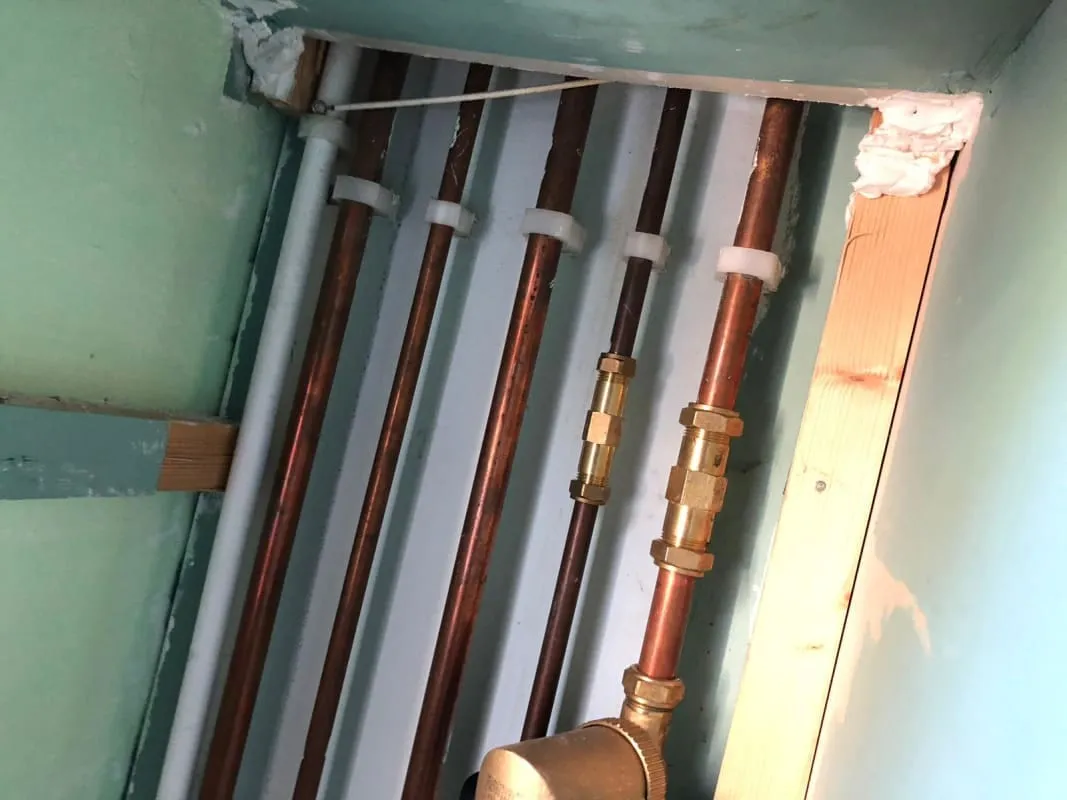
If your home was built before about 1970 and the supply pipe has never been replaced, you may still have lead pipes. Lead pipe is dull grey, soft, and shows a shiny silver colour when you scratch it gently. If you find one, plan to replace it, because lead can dissolve into drinking water.
Lead was widely used for water pipes for many years and plenty of it is still in the ground under London’s Victorian and Edwardian streets. Here is how to check yours and what happens next.
How to identify lead pipes
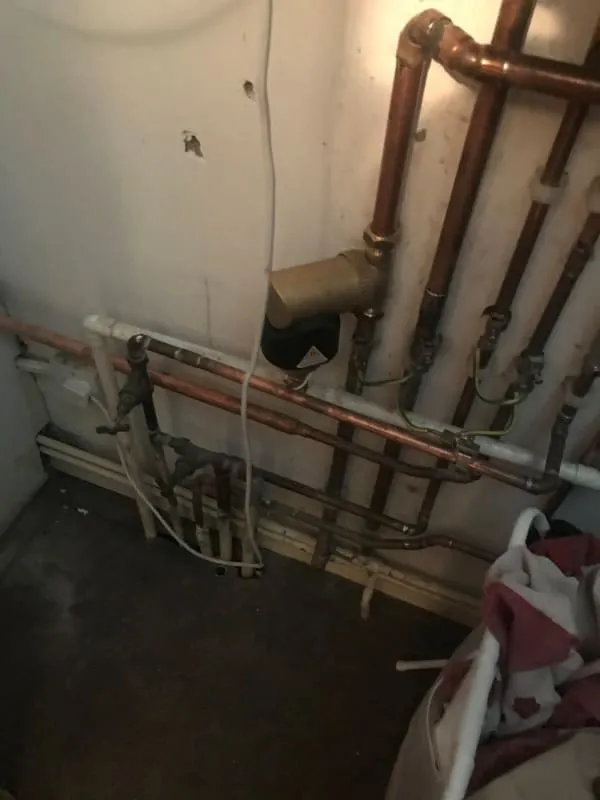
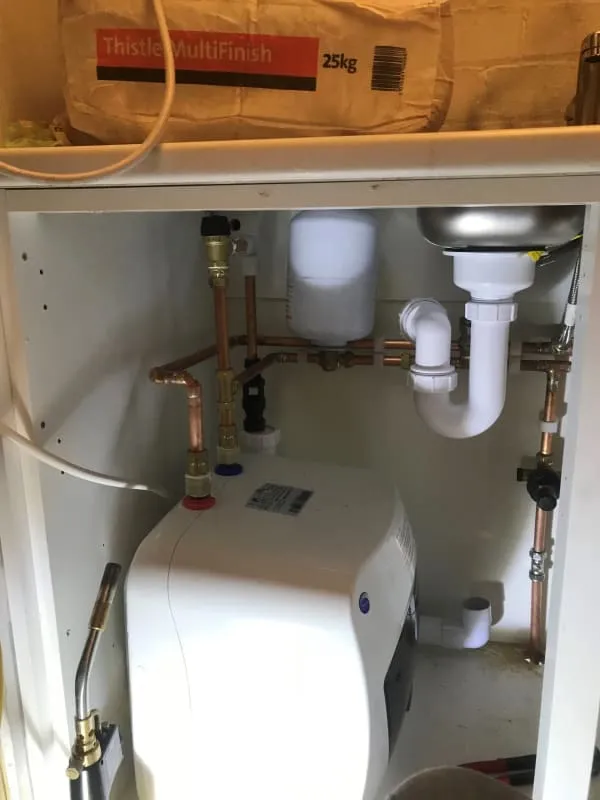
The easiest place to look is where the water comes into your home, usually at the stopcock under the kitchen sink or near the front of the house. Our guide on how to find your stopcock helps if you are not sure where that is.
Look at the pipe just below the stopcock, where it comes up through the floor.
| Material | What it looks like | Scratch test |
|---|---|---|
| Lead | Dull grey, often lumpy or bulging joints, bends in smooth curves | Soft, scratches easily to show shiny silver |
| Copper | Orange-brown or green with age | Shows bright copper colour |
| Galvanised steel | Grey, hard, threaded joints | Hard to scratch, stays grey |
| Plastic (MDPE) | Usually blue, sometimes black | Plastic |
Other signs of lead:
- Swollen, rounded joints where two lengths meet. These are called wiped joints and are typical of lead.
- Dull thud when tapped. Tap it gently with a coin. Lead makes a dull sound. Copper and steel ring.
- Magnet test. A magnet will not stick to lead or copper, but it will stick to steel.
Scratch only lightly with a coin or key, and do not file or sand the pipe. If you are unsure, take a clear photo and send it to us.
Lead may also be hidden. A visible copper or plastic pipe at the stopcock can still connect to an old lead pipe under the floor or under the front garden. Some homes have a short lead section left after a partial replacement.
Why replace lead pipes?
Lead is harmful to health, and there is no safe level of lead in drinking water. It is a particular concern for babies, young children and pregnant women. Water companies treat the supply to reduce how much lead dissolves from old pipes, but the most reliable fix is to remove the lead.
For up-to-date health advice, check the guidance from your water company, the Drinking Water Inspectorate, or GOV.UK, as recommendations can be updated. Until a lead pipe is replaced, common advice is to run the cold tap for a short while first thing in the morning or after you have been away, and to use only the cold tap for drinking and cooking.
Old lead pipes are also often narrow and furred up, so replacing them can improve low water pressure at the same time.
Who owns which section of the pipe?
This is where most people get confused, and the details can vary, so treat this as a general guide and check with your water company.
- The communication pipe: the section from the water main in the street to your boundary, usually up to and including the outside stop valve. This is normally the water company’s responsibility.
- The supply pipe: the section from your boundary into your home, up to and including your internal stopcock. This is usually the property owner’s responsibility.
- Internal plumbing: all pipes after your stopcock. Also the owner’s responsibility.
In practice, the lead you are most likely to need to replace is the supply pipe from your boundary to the house, plus any lead inside. If you rent, this is your landlord’s responsibility.
Some water companies have schemes to replace their lead section when a customer replaces theirs, and some offer help with the customer side. These schemes and what they cover change over time, so contact your water company before you book the work. In much of South London that is Thames Water, and in parts of Surrey and south London it is SES Water. Your water bill will tell you which.
How lead pipe replacement works
- Survey. We check what the pipe is made of, where it runs, how deep it is and whether there is any lead inside the house.
- Free written quote. For planned pipe replacement we give you a written quote before any work starts.
- Water company contact. We advise you to tell your water company the work is planned, in case they can replace their section at the same time.
- New supply pipe. The old pipe is replaced with modern plastic pipe of the right size. Depending on the route, this can mean digging a trench across a front garden or path, or using methods that avoid digging the whole route.
- Connection and testing. The new pipe is connected at the boundary and to a new stopcock inside, then tested for leaks.
- Internal lead removed. Any remaining lead pipe inside the house should be replaced too, or the job is only half done.
Our water mains and pipework service covers the whole job. We work across South and South West London, including older homes in Battersea and Streatham.
What does it cost?
Every supply pipe is different, depending on length, depth and what is in the way, so we do not quote a fixed price. You get a free written quote after we have seen it. Smaller jobs, such as checking the pipe or replacing internal lead, are charged at our hourly rate of £120 an hour including VAT (£100 + VAT) Monday to Friday, 8am to 5pm. See our prices page for details.
When to call an engineer
- You think you have lead pipe but are not sure
- You have found lead and want it replaced
- Your water pressure has always been poor in an older house
- You are buying an older property and want the supply checked
- You have a leak on an old supply pipe
Call Lee on 020 8050 5913. Send him a photo of the pipe under your stopcock and he can usually tell you straight away what it is made of, at no charge.
Stuck? Call Lee.
If you are not sure it is safe, stop and call. Advice by phone is free.
020 8050 5913