Low water pressure at home? Causes and fixes
Low water pressure can come from your supplier, a half-closed stopcock, limescale or an old supply pipe. Here is how to find the cause and what fixes it.
If your water pressure has suddenly dropped, check with neighbours and your water company first, because a burst main or works in the street is the most common cause. If it has always been weak, or only one tap or the hot water is affected, the problem is usually inside your home and a plumber can find it.
Low water pressure is one of the most frequent complaints we hear from older homes across South London, and the fix ranges from opening a valve to replacing the supply pipe.
Low water pressure: sudden or always like this?
That one question narrows things down quickly.
- Sudden drop, whole house: likely a problem in the street, such as a burst main, repairs or high demand. Ask a neighbour, then check your water company’s website or service updates.
- Gradual drop over months: often limescale building up in taps, shower heads or valves, or a partly closed stopcock.
- Always been weak: often an old, narrow or lead supply pipe, or a long run from the street.
- One tap only: a blocked aerator, a faulty tap cartridge or an isolation valve partly closed.
- Hot only, cold is fine: the problem is in your hot water system, not the mains.
Pressure or flow?
People use the two words for the same thing, but they are different. Pressure is the force pushing water through the pipe. Flow is how much water actually comes out in a given time. You can have decent pressure but poor flow if a pipe is narrow or partly blocked. A simple test is to time how long it takes to fill a bucket from the cold kitchen tap. Note the result and compare it after any fix, or tell us when you call.
Checks you can do yourself
- Ask the neighbours. If they have the same problem, contact your water company. It is their supply to fix.
- Check the stopcock is fully open. It is often under the kitchen sink. Turn it anticlockwise until it stops, then back a quarter turn. Stopcocks are sometimes left half closed after a repair. Our guide on how to find your stopcock helps if you are not sure where it is.
- Check isolation valves. Small valves with a screwdriver slot on pipes to taps, toilets and appliances should have the slot running in line with the pipe when open.
- Clean tap aerators and shower heads. Unscrew the aerator on the tap spout or the shower head and soak it in descaler or white vinegar. London’s hard water clogs these surprisingly fast.
- Run every tap. If one tap is weak and the others are fine, the problem is local to that tap.
Old and lead supply pipes
Many Victorian and Edwardian homes in areas such as Clapham and Battersea still have their original supply pipe running from the street to the house. Older pipes are often narrower than modern ones, and they can be furred up inside. Lead pipes in particular are worth replacing for water quality as well as pressure, and our guide to lead water pipes explains how to spot one.
Replacing the supply pipe with a modern plastic pipe of the right size can make a real difference to flow. We handle this through our water mains and pipework service and give you a free written quote first.
Low hot water pressure only
If the cold taps are strong but the hot is weak, look at how your hot water is made.
- Combi boiler: a partly blocked plate heat exchanger or filter, often from limescale, can slow the flow. A combi also has a limit on how much hot water it can heat at once, so two taps at the same time will feel weak.
- Tank in the loft (gravity fed): pressure depends on how high the tank sits above the tap. A shower on the top floor will always be gentle with this setup.
- Unvented cylinder: runs at mains pressure, so weak hot water often points to a faulty valve or a strainer that needs cleaning.
Our guide on limescale in boilers covers the hard water side in more detail.
When a pump helps, and when it does not
A pump can boost pressure, but it is not always the right answer, and the rules matter.
| Your setup | Will a pump help? |
|---|---|
| Gravity-fed hot water from a loft tank | Often yes. A shower pump or whole-house pump fed from the tank is common. |
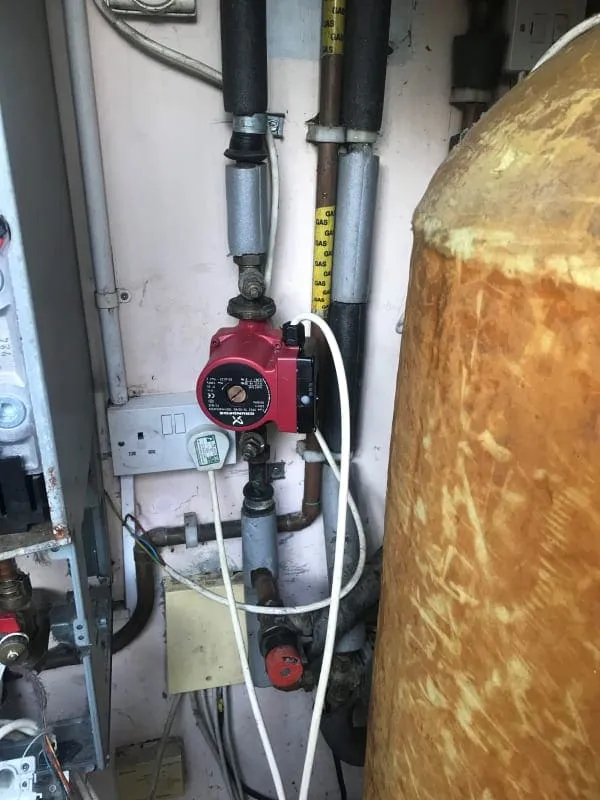
| Weak mains, combi or unvented system | Sometimes, but not by pumping straight off the mains. A cold water storage tank with a pump, sometimes called a booster set, is the usual approach. |
| A blocked or undersized supply pipe | No. Fix the pipe first. A pump cannot add water the pipe cannot supply. |
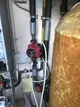
Water regulations restrict pumps that draw directly from the mains supply, because they can reduce pressure for neighbours. The details can change and depend on your water company, so we check the rules and your supply before recommending anything. See our water pumps page for the options we fit.
What does it cost?
Finding the cause is charged by the hour: £120 an hour including VAT (£100 + VAT) Monday to Friday, 8am to 5pm, and £180 an hour including VAT (£150 + VAT) at other times. Planned work such as a pump or a new supply pipe gets a free written quote. Full details are on our prices page.
When to call an engineer
- Pressure is low throughout the house and neighbours are fine
- You have opened the stopcock fully and nothing has changed
- You think you have a lead or old galvanised supply pipe
- You want a pump or booster set fitted
- The hot water is weak but the cold is fine
Call Lee on 020 8050 5913. Tell him whether the drop was sudden or gradual and which taps are affected, and he can usually point you in the right direction for free. If it needs a visit, book through our water mains and pipework page.
Stuck? Call Lee.
If you are not sure it is safe, stop and call. Advice by phone is free.
020 8050 5913