New boiler cost in London: what affects the price
What really drives the cost of a new boiler in London, from boiler type and output to flues, moving it and system condition, and how a free written quote works.
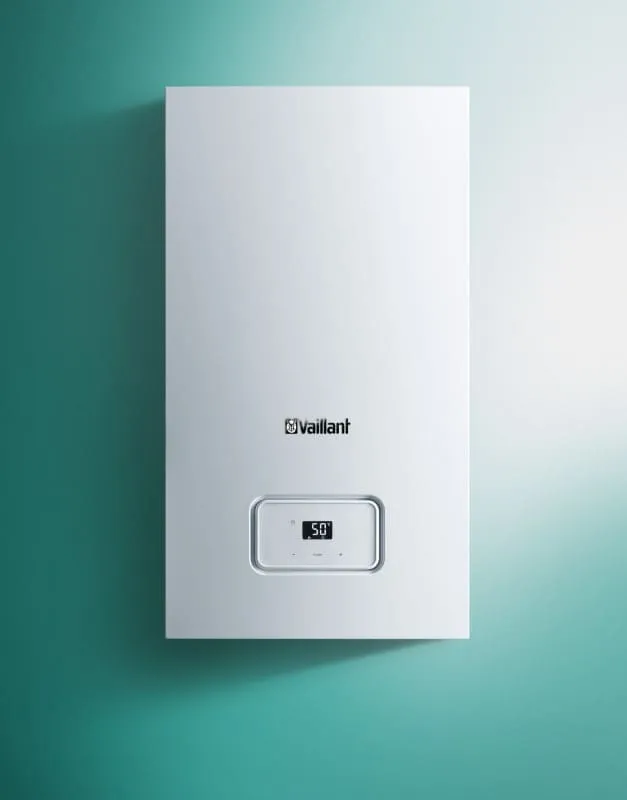
The cost of a new boiler depends far more on your home than on the boiler itself. The type of boiler, the output you need, whether it stays in the same place, the flue route and the state of your existing heating system all move the price, which is why an honest installer will want to see the property before giving you a figure.
We do not publish a list price for new boilers for exactly that reason. Instead we give a free written quote after a survey, so you know what you are paying for before you agree to anything. Here is what goes into that number.
What affects new boiler cost?
1. The type of boiler
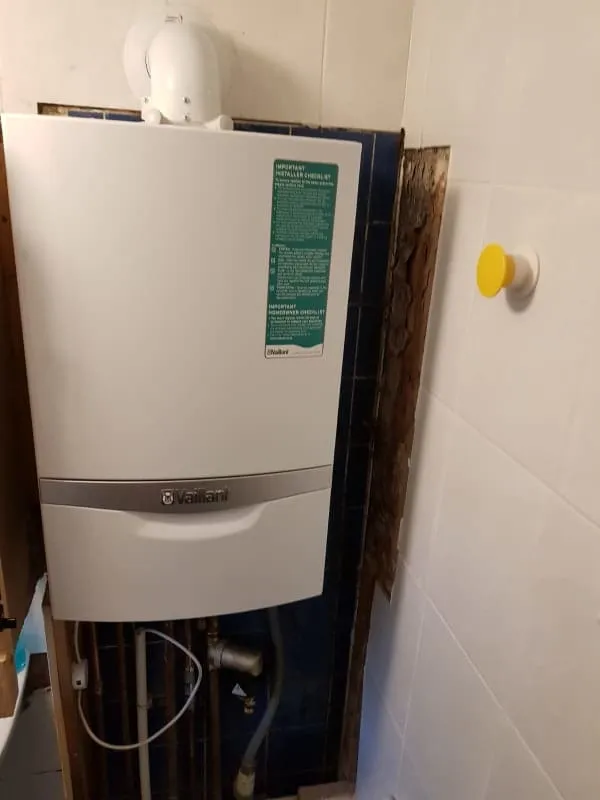
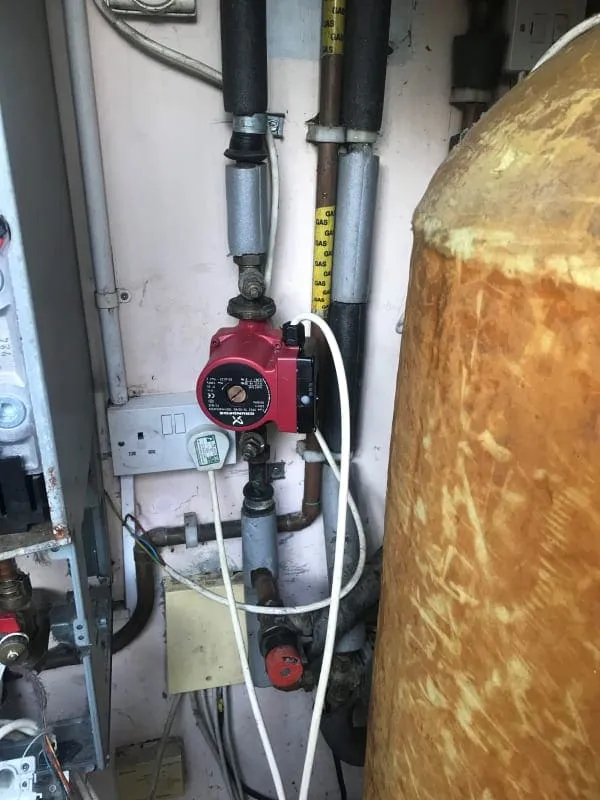
Swapping like for like, combi for combi, is usually the simplest job. Changing type is more work. Converting a regular boiler with tanks in the loft to a combi means removing the cylinder and tanks and altering pipework, while moving to a system boiler may mean fitting a new unvented cylinder. Our guide to combi vs system vs regular boilers explains which suits which home.
2. The output you need
Boilers are sized in kilowatts (kW). A combi has to heat tap water instantly, so its size is driven by how much hot water you use at once. A system or regular boiler is sized more around the heat your home loses. Too small and you run out of hot water or heat; too big and you pay more for a boiler that cycles on and off inefficiently. We work out the right size during the survey rather than guessing from the number of bedrooms.
3. The make and model
Different manufacturers and ranges sit at different price points, and better models often come with longer warranties. We can talk you through the trade-offs between makes honestly.
4. Moving the boiler
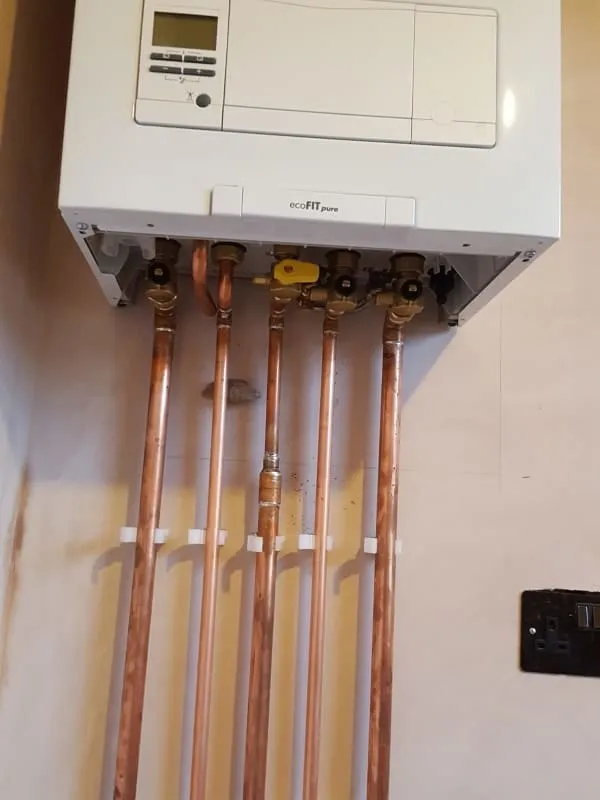
Keeping the boiler where it is keeps costs down. Moving it, say from a kitchen to a loft or utility cupboard, means new gas, water, heating and condensate pipework, plus a new flue position. In older London houses, running pipes neatly through floors and walls can take real time. That does not mean you should not move it, just that it is one of the biggest variables.
5. The flue
The flue carries fumes safely out of the building, and the rules on where it can end up are strict. A straight flue through an outside wall behind the boiler is simplest. A vertical flue through the roof, a long horizontal run, a plume kit to direct vapour away from a neighbour’s window, or access needs such as scaffolding for a high flue all add to the job.
6. Gas supply and condensate
A combi can need a larger gas supply than an older boiler, and the existing pipe from the meter may be too small. The condensate pipe also needs a suitable route to a drain. Both are checked on the survey. If your current condensate pipe runs outside and freezes in winter, this is a good time to reroute or upsize it.
7. The condition of your heating system
A new boiler connected to dirty old pipework will not last as long as it should. Sludge and limescale (London’s hard water does not help) can block the new heat exchanger. Most systems need cleaning before a new boiler goes in, either a chemical clean or a full power flush where sludge is bad, plus a magnetic filter. Manufacturers often make system cleaning and a filter a condition of their warranty, so it is not an optional extra to skip.
8. Controls
Building regulations in England set minimum requirements for controls fitted with a new gas boiler, and the rules can change, so we check the current position on GOV.UK for each install. Beyond the minimum, you might choose a smart thermostat, room-by-room control or new thermostatic radiator valves. These add to the cost but give you more control over how you use your heating.
9. Warranty length
We offer up to 15 years warranty on boilers, depending on the make and model. A longer warranty may come with a higher upfront price, so it is worth comparing quotes on the same basis. Our boiler warranty guide explains what a warranty covers and what keeps it valid.
10. Extra work found on the day of the survey
Sometimes the survey turns up something that needs doing anyway: corroded radiator valves, an undersized pipe, a cylinder near the end of its life. We put these on the quote as separate lines so you can see what is essential and what is optional.
What is included in a proper installation?
A good quote should cover removing the old boiler, fitting and commissioning the new one, the flue, system cleaning, a filter, controls, registering the installation with the manufacturer for the warranty, and notifying building control through Gas Safe. Only a Gas Safe registered engineer can legally install a gas boiler. Cutting corners here is how boilers end up unsafe, inefficient or out of warranty.
How our free written quote works
- Call or book online. Tell us what you have now and what you want.
- Survey. An engineer visits, looks at your current boiler, gas supply, flue options, pipework and hot water use, and asks how you live in the house.
- Written quote. You get a clear written quote listing the boiler, the work and any optional extras. It is free, with no obligation.
- Ask questions. If anything is unclear, ring Lee and he will go through it with you.
Comparing quotes? Make sure they include the same items, especially system cleaning, controls and warranty length. A cheap quote that leaves those out is not a like-for-like comparison.
When to get a quote rather than a repair
If your boiler is old, breaking down often or needs a costly part, replacing it can make more sense than repairing it. Our post on whether to repair or replace your boiler helps you decide.
The Sunday Telegraph named Green PHS best value boiler installer in London in December 2018. To book a survey and free written quote, see our boiler installation page or call Lee on 020 8050 5913.
Stuck? Call Lee.
If you are not sure it is safe, stop and call. Advice by phone is free.
020 8050 5913