Is a power flush worth it? When it helps and when it won't
Is a power flush worth it? It is when sludge is causing cold spots and noisy boilers, but not for every fault. Here is how to tell, and the cheaper options.
A power flush is worth it when sludge is clearly the cause of your heating problems: radiators cold at the bottom, a noisy boiler, black water when you bleed. It is not worth it on a clean, healthy system, and it will not fix a faulty pump, a failed part or radiators that are simply too small for the room.
Lee gets asked about power flushing most weeks, often after someone else has quoted for one. Here is how to work out whether your system really needs it, what the alternatives are, and why it matters so much before a new boiler goes in.
What a power flush actually does
Over the years, water inside a heating system reacts with the steel in radiators and pipes. That produces black iron oxide sludge, plus bits of debris and, in hard water areas like London, limescale. The sludge settles in the lowest, slowest parts of the system: the bottoms of radiators, the boiler’s heat exchanger and narrow pipework.
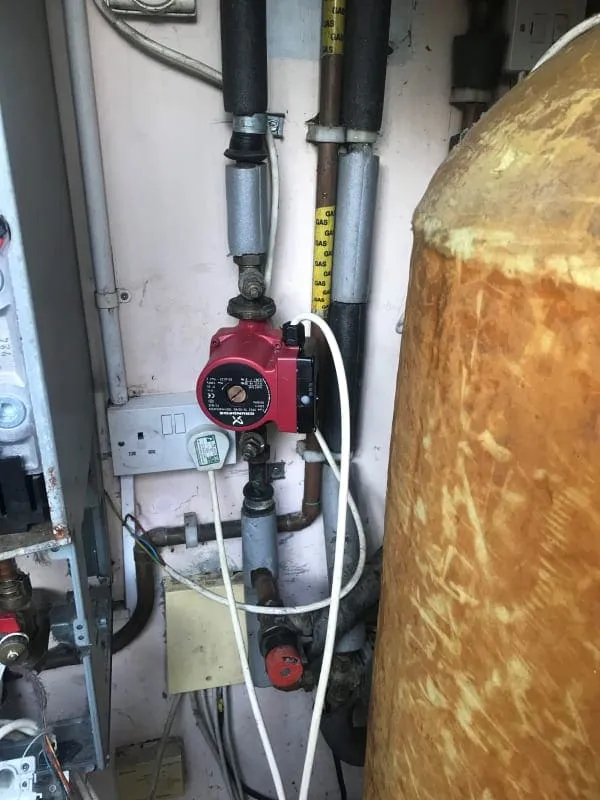
A power flush connects a pump to your system, usually where the circulating pump sits, and pushes water and cleaning chemicals round at high flow. The engineer works through each radiator in turn, reverses the flow, and keeps going until the water runs clean. The system is then refilled with fresh water and an inhibitor that slows corrosion from starting again.
Signs your system has sludge
Sludge builds slowly, so the signs creep up on you. Look for:
- Radiators that are cold at the bottom and warm at the top (cold at the top is usually just air, see our guide to radiators cold at the top or bottom)
- Black or dark brown water when you bleed a radiator
- Radiators that take a long time to warm up, or some that never get properly hot
- A boiler that kettles, rumbles or bangs as it heats
- Repeated pump or diverter valve failures
- Needing to bleed radiators often, because corrosion produces gas as well as sludge
One sign on its own is not proof. Two or three together, on a system that has never been cleaned, usually is.
Is a power flush worth it for your home?
The honest answer depends on what is wrong and what you are planning next.
| Situation | Is a power flush worth it? |
|---|---|
| Several radiators cold at the bottom, black water when bled | Usually yes |
| Fitting a new boiler to an old, dirty system | Usually yes, or a thorough chemical clean at the least |
| One radiator cold, the rest fine | Often not. That radiator may need a flush on its own, or replacing |
| Whole house cold but water runs clean | No. Look at the pump, valves, controls or boiler first |
| Microbore pipework (very thin pipes) | Needs care. A gentler clean may suit better |
| Old, weak radiators or pipework with signs of leaks | Ask first. High flow can expose weak spots |
That last point matters. A power flush does not cause leaks, but it can find them. If a radiator has been rusting from the inside for years, the sludge may be the only thing holding a pinhole closed. A good engineer will look over the system and tell you about that risk before starting.
When a power flush won’t help
We see people pay for a flush when the real fault is something else. A power flush will not fix:
- A failed circulating pump or a seized diverter valve
- Air locks that bleeding would clear (bleeding radiators is the first thing to try)
- An unbalanced system, where radiators near the boiler get all the heat
- Radiators too small for the room
- A boiler with a fault code for an unrelated part
If your heating is not working properly, start with a diagnosis, not a flush. A central heating repair visit finds the real cause, and if sludge is the problem it will be obvious.
Alternatives to a power flush
A power flush is not the only way to clean a system. Depending on how bad it is:
- Chemical cleaner and drain down. A cleaning chemical is added to the system and left to circulate with the heating running, then the system is drained, refilled and dosed with inhibitor. It is gentler and takes less time on site, and it suits systems with light sludge.
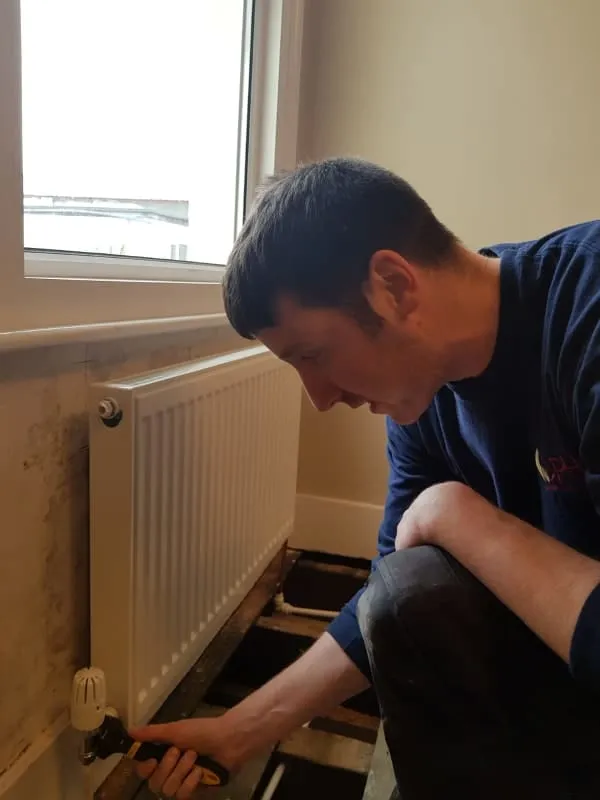
- Flushing individual radiators. If one or two radiators are the problem, they can be taken off the wall and flushed through outside with a hose.
- A magnetic filter. It does not clean an existing mess quickly, but it catches sludge as it circulates and stops it building up again. Read more in our guide to the magnetic boiler filter.
- Inhibitor top-up. On a clean system, checking and topping up the inhibitor at the annual service keeps corrosion slow.
Often the right answer is a combination: clean the system once, then fit a filter and keep the inhibitor topped up so you never need to do it again.
Before a new boiler: why cleaning matters
If you are getting a new boiler, cleaning the system is not optional extra. The British Standard for water treatment in heating systems (BS 7593) sets out how systems should be cleaned and protected, and boiler manufacturers make a clean system and inhibitor a condition of their warranty. Putting a new boiler on dirty water is like fitting a new engine and keeping the old oil: the sludge heads straight for the new heat exchanger.
When we quote for a boiler installation, we look at the state of the existing system and include the right level of cleaning, whether that is a power flush or a chemical clean, plus a magnetic filter. The quote is free and written, so you can see exactly what is included.
How long does it take?
A power flush on a typical house usually takes most of a day, longer on larger systems or ones in very poor condition. A chemical clean is quicker on site. Your heating and hot water will be off while the work is done.
On cost, we charge by the hour: £120 an hour including VAT (£100 + VAT) Monday to Friday, 8am to 5pm, with chemicals and materials at cost plus 20%. Full details are on our prices page.
When to call an engineer
- More than one radiator is cold at the bottom
- Bleeding brings out black water every time
- Your boiler is noisy, or keeps locking out after heating up
- You are about to replace the boiler and the system has never been cleaned
- You have already had a flush and the problem is still there
If you are not sure whether your system needs a power flush, call Lee on 020 8050 5913. He will ask a few questions and tell you honestly whether a flush is worth it, and if it is not, what to try instead. You can also book through our power flushing page.
Stuck? Call Lee.
If you are not sure it is safe, stop and call. Advice by phone is free.
020 8050 5913