Frozen pipes: how to prevent, thaw and handle a burst
Frozen pipes can split and flood your home when they thaw. How to prevent them, spot the signs, thaw them safely and what to do if a pipe bursts.
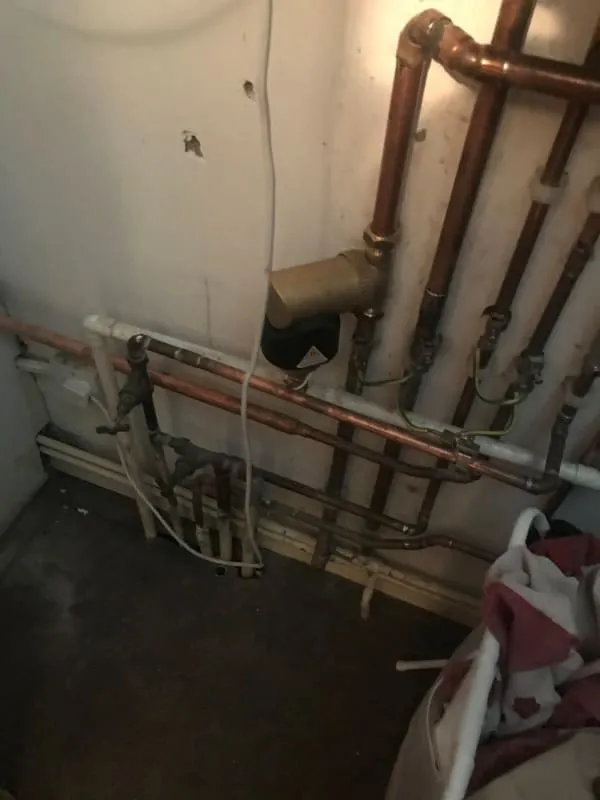
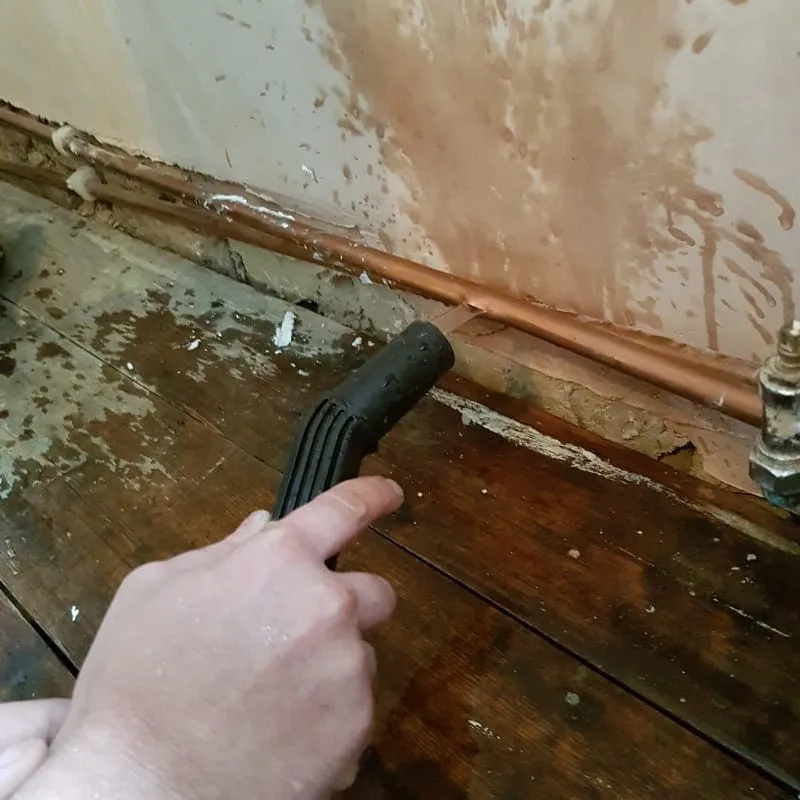
If a tap gives no water in freezing weather, the pipe feeding it has probably frozen. Turn off the stopcock, open the tap, and warm the pipe gently with a hairdryer or hot water bottle, never a naked flame. Frozen pipes are a risk because ice expands and can split the pipe, and the leak often only shows once it thaws.
The good news is that most frozen pipes can be prevented with a few simple steps before the cold arrives.
Which pipes freeze?
Pipes in warm rooms rarely freeze. The ones at risk are in cold spaces:
- Pipes and tanks in the loft
- Pipes on or through outside walls
- Outside taps and their supply pipe
- Pipes under suspended floors, in cellars and garages
- Pipes in empty rooms or properties with the heating off
A frozen boiler condensate pipe is a different problem with its own fix. If your boiler has stopped and is gurgling, read our guide to the frozen condensate pipe first.
How to prevent frozen pipes
- Lag exposed pipes. Foam pipe insulation from a DIY shop slips over pipes and is cheap. Cover pipes in the loft, under floors and in the garage. Do not forget the cold water tank in the loft, but leave the area under the tank uninsulated so warmth can rise to it.
- Keep the heating on low. In a cold snap, leave the heating on at a low temperature even when you are out or away. Many thermostats and smart controls have a frost setting for this.
- Open the loft hatch a little during very cold spells so some warmth from the house reaches pipes and tanks up there.
- Isolate and drain the outside tap. If there is an isolation valve inside, close it and open the outside tap to let it drain. Fit an insulated cover over the tap.
- Fix dripping taps. A slow drip can freeze in a cold pipe and block it. Our guide to a dripping tap helps.
- Know where your stopcock is. If a pipe bursts you need to shut the water off fast. See how to find your stopcock.
If you are going away in winter, ask a neighbour to check on the house, or ask us about draining down the system.
Signs your pipes have frozen
- A tap gives no water, or only a trickle, when the weather is below freezing
- The toilet cistern does not refill
- Frost or ice is visible on a pipe
- A pipe looks bulged or has a small split
- Strange smells from drains, as frozen waste pipes can trap them
How to thaw frozen pipes safely
- Turn off the water at the stopcock. This limits flooding if the pipe has split.
- Open the tap the pipe feeds, so water and steam can escape as it thaws.
- Find the frozen section. Work from the tap back towards the stopcock. It is usually in the coldest spot.
- Warm it gently. Use a hairdryer on a low setting, a hot water bottle, or towels soaked in warm water wrapped around the pipe. Start nearest the tap and work back.
- Check for leaks as it thaws. Look closely along the pipe and at joints.
- Turn the water back on slowly once the pipe is clear and there is no sign of a split.
Never use a blowtorch, gas torch or any naked flame. It can damage the pipe, melt joints and start a fire in a loft or under a floor. Do not pour boiling water on pipes either. Keep electrical appliances such as hairdryers well away from any water.
What to do if a pipe bursts
A split pipe can release a lot of water quickly, so act fast.
- Turn off the stopcock straight away.
- Turn off the boiler and heating, and any immersion heater.
- Open all cold taps to drain the remaining water from the system. Flush toilets to empty cisterns.
- Keep away from electrics if water is near them. If water is coming through a ceiling near light fittings or sockets, only switch off at the consumer unit if you can reach it without touching water. If not, keep clear and call an electrician.
- Catch the water with buckets and towels. If a ceiling is bulging with water, do not stand under it.
- Take photos for your insurer.
- Call a plumber. Our emergency plumber service runs 24/7, 365 days a year.
In a flat, let your neighbours below know straight away and contact your managing agent.
After a freeze: hidden leaks
Sometimes a pipe splits under a floor or in a wall and nobody notices until a damp patch appears. If your water meter keeps turning with every tap closed, or you see new stains, you may have a hidden leak. Our leak detection service finds it without tearing the house apart.
What does it cost?
Emergency call-outs are charged by the hour: £120 an hour including VAT (£100 + VAT) Monday to Friday, 8am to 5pm, and £180 an hour including VAT (£150 + VAT) at all other times, with materials at cost plus 20%. See our prices page for how billing works.
When to call an engineer
- A pipe has burst or you can see a split
- You cannot reach or find the frozen section
- The frozen pipe is in the loft near the cold water tank
- Your heating or boiler has stopped as well
- Water is coming through a ceiling
Call Lee on 020 8050 5913. Lines are open 6am to 6pm every day, and our emergency service runs around the clock. If he can talk you through thawing it safely, there is no charge.
Stuck? Call Lee.
If you are not sure it is safe, stop and call. Advice by phone is free.
020 8050 5913