Smart thermostat guide: Hive vs Nest vs tado
Hive, Nest and tado compared: how each smart thermostat works, boiler compatibility, installation and smart radiator valves, all in plain English.
A smart thermostat lets you control your heating from your phone, set schedules easily and, with some models, turn the heating down automatically when everyone has left the house. Hive, Google Nest and tado all do the basics well. The right one for you depends on your boiler, whether you want room-by-room control, and which app and voice assistant you already use.
Here is how they work, how the three compare, and what to check before you buy.
How a smart thermostat works
A traditional thermostat is a dial on the wall that switches the boiler on when the room drops below the set temperature. A smart thermostat does the same job, but it is connected to your home Wi-Fi through a small hub or receiver. That gives you:
- Remote control. Turn the heating up on the way home, or off if you forgot before going away.
- Easy scheduling. Set different times for weekdays, weekends and holidays in an app rather than with tiny buttons.
- Geolocation. Some systems use your phone’s location to notice when the house is empty and lower the temperature.
- Hot water control. On a system boiler or regular boiler with a hot water cylinder, many smart thermostats also schedule the hot water.
- Voice control. Most work with Amazon Alexa, Google Assistant or Apple Home, though support varies by brand and model.
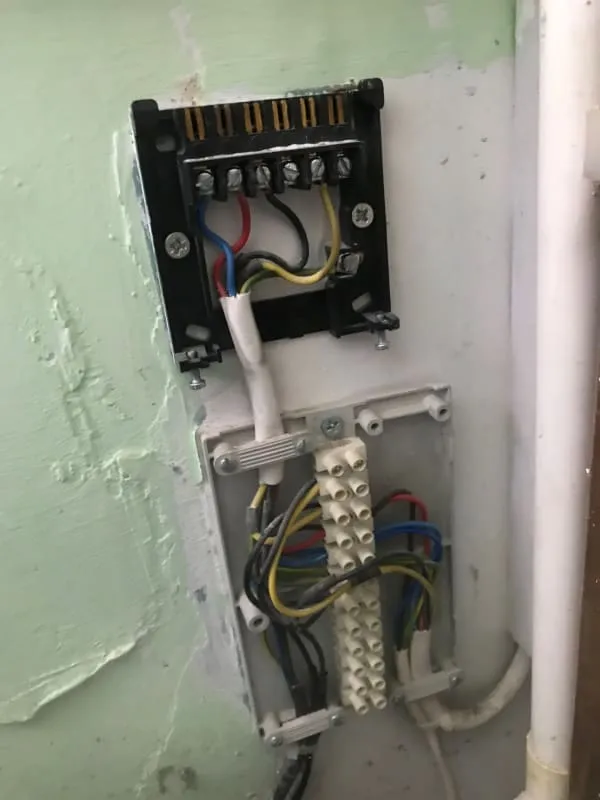
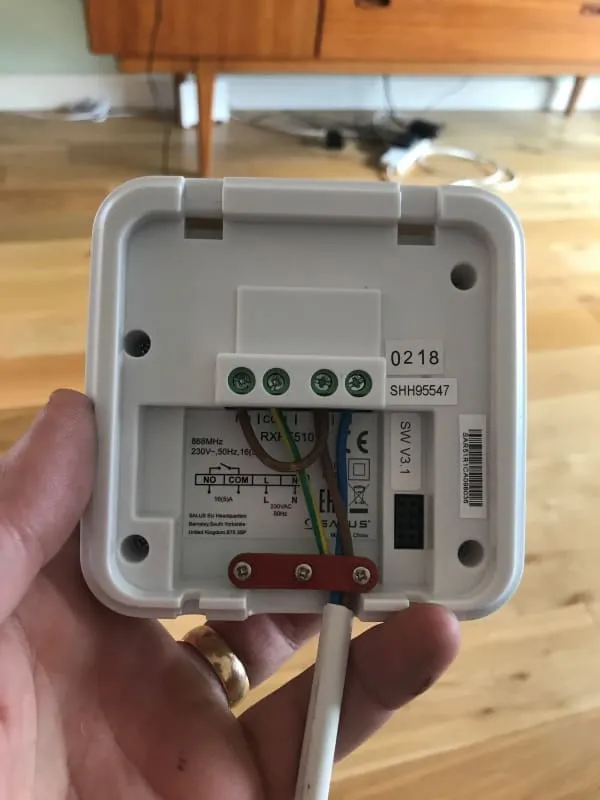
The thermostat itself replaces your existing room thermostat, and the receiver usually replaces or wires in alongside your existing programmer or timer, close to the boiler.
Hive vs Nest vs tado compared
All three brands update their products and apps regularly, and some features move behind paid subscriptions over time. Use this as a guide to how they differ, then check the current details on each maker’s website.
| Hive | Google Nest | tado | |
|---|---|---|---|
| Best known for | Simple app, widely used in UK homes | Learning your routine and adjusting automatically | Room-by-room control and geofencing |
| Smart radiator valves | Yes, Hive’s own | Nest focuses on the main thermostat | Yes, tado’s own |
| Hot water scheduling | Yes, on suitable models | Yes, on suitable models | Yes, on suitable models |
| Geolocation | Yes | Yes, based on presence | Yes, a core feature |
| Wider smart home | Hive’s own plugs, lights and sensors | Google Home and Nest devices | Works with major voice assistants |
| Subscription | Some features may need one | Some features may need one | Some automatic features need one |
Hive
Hive is a common choice in the UK, partly because it has been around a long time and is easy to use. The app is clear, scheduling is straightforward and you can add Hive smart radiator valves to control rooms separately. It suits most people who want simple remote control without much fuss.
Google Nest
The Nest Learning Thermostat is designed to learn when you like the heating on and build a schedule for you. It fits well in a home that already uses Google Home speakers or Nest cameras. If you want every room controlled separately, you would need to look beyond Nest’s own products.
tado
tado leans heavily on room-by-room control. Its smart radiator thermostats let each room run its own schedule, and its geofencing turns the heating down when the last person leaves. Some of its automatic features require a subscription, so check what is included before buying.
Will a smart thermostat work with my boiler?
Most smart thermostats work with most gas boilers, because at the simplest level they just switch the boiler on and off. The things to check are:
- Your boiler type. Combi boilers only need heating control. System and regular boilers with a cylinder need a model that also handles hot water.
- Modulating control. Many modern boilers can run gently at a lower output rather than switching fully on and off. Controls that talk to the boiler using a protocol such as OpenTherm, or a boiler maker’s own system, can take advantage of this. Support varies by brand, model and boiler, so use the manufacturer’s compatibility checker.
- Your wiring. Older systems may have a wiring centre with unusual configurations. A combi with a plug-in timer is usually simple. A system with zone valves needs more thought.
- Wi-Fi signal. The hub needs a reliable connection. If your router is far from the boiler, a booster may be needed.
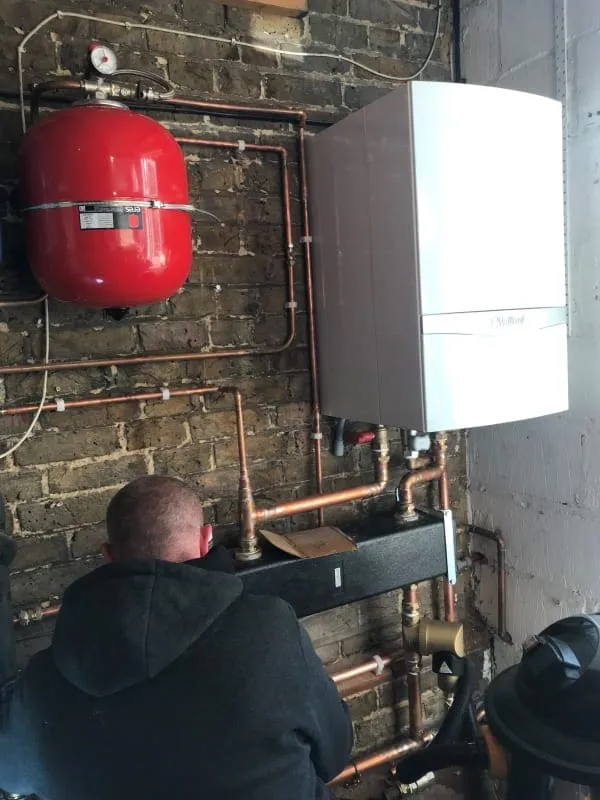
If you are thinking about a new boiler as well, it is worth choosing the controls at the same time. Boiler manufacturers often have their own smart controls that work closely with their boilers. We can talk you through the options when we give you a free written quote for a boiler installation.
Installation: DIY or engineer?
Some smart thermostats are sold as DIY kits. If you are comfortable with mains electrics and your existing wiring is straightforward, that may be fine. In practice, many of the calls we get are from people halfway through a DIY install with the heating not working.
Installing the receiver means working on the 230V wiring that controls your boiler. It must be done with the power isolated, and wiring mistakes can stop the boiler firing or leave it running all the time. Never open the boiler casing to make connections inside it. If the instructions require that, it is a job for an engineer.
When we fit smart heating controls, we check the wiring, set up the hub and app with you, and test that heating and hot water both respond correctly. We charge by the hour, with parts at cost plus 20%; our prices page has the details.
Smart radiator valves (smart TRVs)
A smart thermostat on its own controls the whole house from one point. Smart radiator valves take it further. They replace the head of a normal thermostatic radiator valve and let you set each room to its own temperature and schedule. Spare rooms can stay cool while the living room is warm.
A few points worth knowing:
- They fit most standard radiator valve bodies, sometimes with an adaptor.
- They run on batteries, which need changing from time to time.
- Do not fit one to the radiator in the room with the main thermostat, for the same reason as a normal TRV. Our guide to thermostatic radiator valves explains why.
- If a radiator is cold because of sludge or air, a smart valve will not fix it.
When to call an engineer
- The boiler will not fire after fitting a new thermostat
- Your system has zone valves, a wiring centre or more than one heating zone
- You need hot water control on a system with a cylinder
- You are not confident working with mains wiring
- You want controls chosen to match a new boiler
Call Lee on 020 8050 5913 to talk through which smart thermostat makes sense for your home and boiler. He can tell you over the phone whether your setup is straightforward, and you can book an installation through our smart heating controls page.
Stuck? Call Lee.
If you are not sure it is safe, stop and call. Advice by phone is free.
020 8050 5913