Banging pipes? Water hammer explained and fixed
A loud bang when you turn a tap off is usually water hammer. Here is what causes it, what you can check yourself and how a plumber fixes it for good.
A loud bang or thud in the pipes when a tap shuts off, or when the washing machine or dishwasher stops filling, is almost always water hammer. Water moving through the pipe is stopped suddenly, the pressure wave hits the pipe walls, and any loose section of pipe jumps and knocks against a joist or wall.
It is common in London homes, and it is usually fixable. It is worth sorting, because repeated hammering can loosen joints and stress valves over time.
What causes water hammer?
Water is heavy and it does not compress. When a valve closes fast, the moving water has nowhere to go, so it slams to a stop. Three things make it worse:
- Quick-closing valves. Washing machines, dishwashers, toilet fill valves and quarter-turn lever taps all shut very quickly.
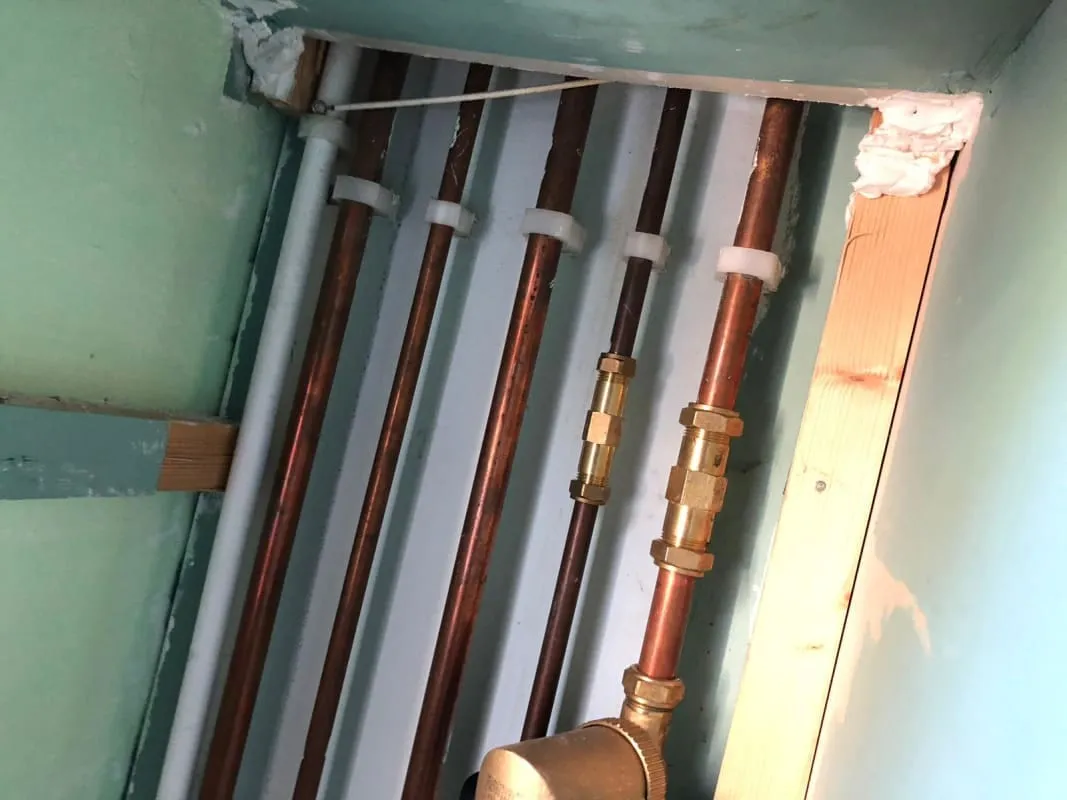
- Loose pipes. Pipes that are not clipped properly, or where clips have broken or been removed during building work, are free to move and bang.
- High mains pressure. The higher the pressure, the harder the water hits when it stops. Pressure can vary between streets and at different times of day.
Sometimes a worn washer in a tap or a faulty fill valve in a toilet cistern causes a juddering or a rapid knocking while water is running, rather than one bang when it stops. That is a related problem and often a cheap fix.
Banging, knocking or ticking: which noise is it?
Different noises point to different causes, so it helps to notice when it happens.
| Noise | When you hear it | Likely cause |
|---|---|---|
| One loud bang | As a tap, toilet or appliance stops filling | Water hammer |
| Juddering or machine-gun knocking | While a tap runs or a cistern fills | Worn tap washer or faulty fill valve |
| Ticking or creaking | As the heating warms up or cools down | Heating pipes expanding against joists or notches |
| Banging or kettling from the boiler | When the heating is running | A boiler problem, not the pipes |
Ticking heating pipes are not water hammer. Copper pipes grow slightly as they heat up and shrink as they cool. If a pipe is tight in a notch in a joist or rubs against a floorboard, it ticks as it moves. It is harmless but annoying, and the fix is usually to free the pipe or add a sleeve or pad where it touches the timber.
If the noise is coming from the boiler itself, read our guide to boiler banging noises instead.
What you can check yourself
You do not need tools for most of these.
- Find the pattern. Turn on each tap and appliance one at a time and close it. Note which one causes the bang. If it is only the washing machine, the problem is local to that supply.
- Close taps more gently. If you have lever taps, close them slowly for a few days. If the banging stops, you have confirmed it is water hammer.
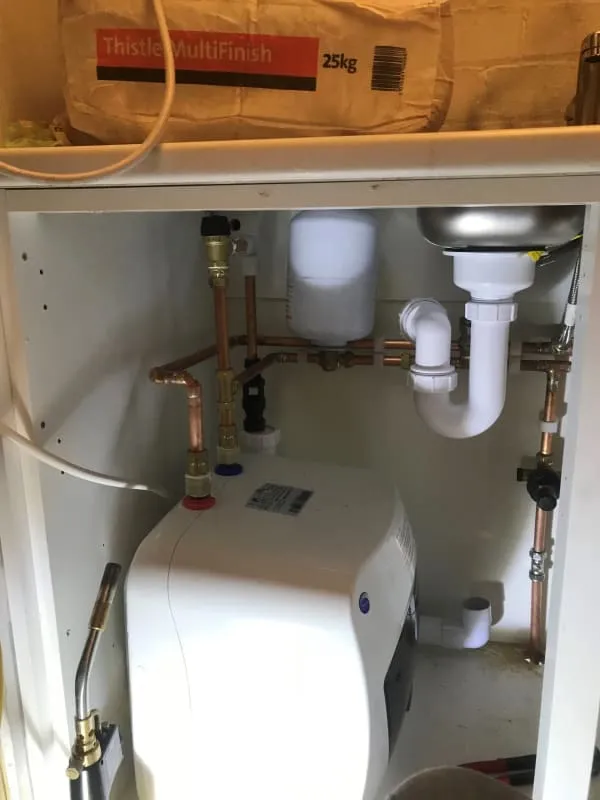
- Look for loose pipes. Check pipes you can see under sinks, in the airing cupboard and in the loft. If a pipe moves easily when you push it, it needs clipping.
- Check the stopcock. A stopcock that is only partly open can sometimes cause odd noises. Make sure it is fully open, then turn it back a quarter turn so it does not seize. Our guide on where to find your stopcock shows where to look.
- Listen for a running cistern. If the toilet judders while it fills, the fill valve may be worn. That is a quick job for a plumber.
Do not lift floorboards or cut into boxing to chase the noise unless you know exactly where pipes and cables run.
How a plumber fixes water hammer
The right fix depends on what is causing it. Often it is a combination.
Clipping and securing pipes
The simplest and most common fix. We find the loose runs, add or replace pipe clips at the right spacing, and pad pipes where they pass through joists. If the noise comes from under a floor, this may mean lifting a few boards.
Fitting water hammer arrestors
An arrestor is a small device fitted close to the valve that causes the problem, such as behind the washing machine. It contains an air cushion or a sprung piston that absorbs the pressure spike when the valve shuts. It is a neat fix when one appliance is the cause.
Fitting a pressure-reducing valve
If mains pressure is high, a pressure-reducing valve fitted near the stopcock brings it down to a steady level for the whole house. That softens the hammer everywhere, and it also takes some strain off taps, valves and appliances. We test the pressure first so we are fixing the real problem, not guessing.
Replacing a faulty valve
A worn toilet fill valve or a tired tap cartridge can be replaced quickly. See our tap repair service if a tap is juddering or dripping.
Is water hammer dangerous?
It is not an emergency on its own, but it should not be ignored. Each bang puts a shock through the pipework, and over time that can loosen compression joints or push a weak joint into a leak. If you hear banging and then notice a damp patch on a ceiling or wall, turn off the water at the stopcock and call us.
What does it cost?
Most water hammer fixes are a short visit. We charge by the hour: £120 an hour including VAT (£100 + VAT) Monday to Friday, 8am to 5pm, and £180 an hour including VAT (£150 + VAT) at other times, with materials at cost plus 20%. Our prices page explains how billing works.
When to call an engineer
- The banging is getting louder or more frequent
- You can see a pipe moving but cannot reach it safely
- There is a damp patch, drip or water stain near the noisy pipe
- The noise is from the boiler or heating rather than the taps
- You suspect the mains pressure is very high
Call Lee on 020 8050 5913 and describe the noise and when it happens. He can often tell you over the phone whether it is a loose clip you can fix yourself, and there is no charge for that advice. If it needs a visit, book through our general plumbing page and we will track down the cause and quiet it for good.
Stuck? Call Lee.
If you are not sure it is safe, stop and call. Advice by phone is free.
020 8050 5913