Boiler lockout: what it means and how to reset it safely
A boiler lockout is a safety shutdown. Here is what causes it, how to reset your boiler once safely, and why repeated lockouts need a Gas Safe engineer.
A boiler lockout means the boiler has detected a problem and shut itself down to stay safe. You can usually press reset once, and if the cause was a one-off, it will start again. If it locks out again, stop resetting and find out why.
Lockout is a protection feature, not a breakdown in itself. It is the boiler telling you something stopped it from working safely, such as no flame, low pressure or a blocked condensate pipe.
What does boiler lockout mean?
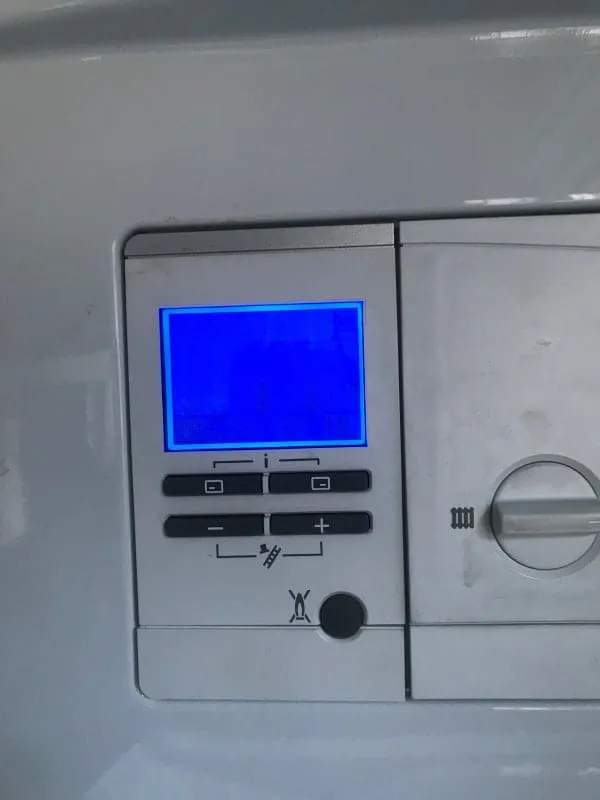
Modern boilers check themselves constantly. If something is outside safe limits, the control board stops the boiler and holds it off until someone presses reset. That is lockout. The display will usually show a fault code, a flashing light or a symbol, and some boilers show the word “lockout” or a flame with a cross through it.
The point of a lockout, rather than the boiler just trying again on its own, is that a person has to notice. If the boiler tried to light over and over with no gas reaching it, or with a blocked flue, that could be unsafe.
How to reset your boiler safely
- Note the fault code. Write it down or take a photo of the display before you do anything. It is the most useful thing you can give an engineer.
- Do the quick checks below so you are not just resetting into the same fault.
- Press the reset button once. It may be marked reset, R, or a flame symbol. On some boilers you hold it for a few seconds. Your user manual will say which.
- Wait. Give the boiler a few minutes to run its start-up sequence. You may hear the fan, then the burner lighting.
- Turn on a hot tap or the heating to check it fires properly.
If it locks out again straight away or within a day, do not keep pressing reset. Repeated resets can hide a real fault, and on some boilers too many resets in a short time can block further resets until an engineer clears it.
Quick checks before you press reset
| Check | What you are looking for |
|---|---|
| Pressure gauge | Roughly 1 to 1.5 bar with the heating cold. Below 1 bar can cause lockout. |
| Gas supply | Does your gas hob light? If you have a prepayment meter, is there credit? |
| Weather | Below freezing? The condensate pipe may be frozen. |
| Power | Has there been a power cut or a tripped switch? |
If the pressure is low, follow our guide to repressurising a combi boiler, then reset. If the condensate pipe is frozen, thaw it first using our frozen condensate pipe guide.
Common causes of boiler lockout
Ignition failure
The most common lockout is the boiler trying to light and failing. Sometimes the cause is outside the boiler: the gas supply is off, a prepayment meter has run out, or there has been work on the gas main in your street. Inside the boiler, it could be a worn ignition electrode, a faulty flame sensor, a fan problem or a failing gas valve. Those are Gas Safe engineer jobs only.
If no gas appliance in the house works, check the meter emergency control valve. The handle should be in line with the pipe when it is on. If it is off and you do not know why, or you smell gas, do not turn it on. Call the National Gas Emergency Service on 0800 111 999.
Low water pressure
Boilers need a minimum pressure to run safely. If it falls too low, they lock out. A single top-up is fine, but if the pressure keeps dropping, there is a leak or a faulty part.
Frozen or blocked condensate pipe
Condensing boilers drain water through a plastic pipe. If it freezes or blocks, water backs up and the boiler locks out. This is the classic cold-snap lockout and often a gurgling sound comes with it.
Overheating
If water cannot circulate properly, for example because of a failed pump, sludge in the system or closed valves, the boiler can overheat and lock out. Sludge builds up faster in London’s hard water areas without a filter and regular servicing.
Flue or air supply problems
If the boiler senses the flue is blocked or not clearing fumes properly, it will shut down. Never cover the flue outside, and never ignore a lockout that comes with a smell of fumes, soot marks or a yellow flame on other gas appliances. Read our guide to carbon monoxide signs and alarms.
Why repeated lockouts need an engineer
One lockout after a power cut or a frozen night is normal. A boiler that locks out every few days is telling you a part is failing or the system has a problem that will get worse. Each restart puts wear on components, and the underlying fault may be a safety issue.
An engineer will read the fault history, test the ignition and flame sensing, check gas pressure, check the flue and look at the condensate route. Many lockout faults are spotted early during an annual boiler service, which is one good reason to keep it up.
When to call an engineer
- The boiler locks out again after one reset
- The same fault code keeps coming back
- The gas supply is fine, the pressure is fine and it is not frozen, but it still will not light
- You see water leaking from the boiler
- You smell gas, or your carbon monoxide alarm sounds. Leave the property and call 0800 111 999
For anything inside the boiler, book a boiler repair. If you are without heating or hot water in winter, we offer a 24/7 emergency call-out, 365 days a year. Labour is £120 an hour including VAT (£100 + VAT) Monday to Friday, 8am to 5pm, and £180 an hour including VAT (£150 + VAT) at other times. See our prices.
Or start with a call. Lee answers 020 8050 5913, and if he can talk you through the reset or a pressure top-up, there is no charge.
Stuck? Call Lee.
If you are not sure it is safe, stop and call. Advice by phone is free.
020 8050 5913