Boiler fault codes: how to read them and what to do
Boiler fault codes tell you why your boiler stopped. Learn how to find what your code means, which faults you can fix safely and which need an engineer.
Boiler fault codes are short messages your boiler shows when it stops or detects a problem. The same code means different things on different makes and models, so the only reliable way to read yours is the manual for your exact boiler. Once you know what it means, you can tell whether it is a simple fix like low pressure or a job for a Gas Safe engineer.
This guide explains how to find the meaning of your code and which kinds of fault are safe for you to deal with.
What are boiler fault codes?
When a modern boiler’s control board spots something wrong, it stops the boiler and shows a code on the display. It might be a letter and number, a number alone, a flashing light pattern or a symbol. Some boilers also store a history of recent faults, which helps an engineer see what has been happening.
There is no single standard. A code on one manufacturer’s boiler can mean something completely different on another, and codes can even change between models from the same manufacturer. That is why we do not publish lists of codes here: a wrong guess can send you down the wrong path.
How to find out what your fault code means
- Write the code down or photograph the display. Include any flashing lights or symbols.
- Find your boiler’s make and model. It is usually printed on the front panel. The full model name and serial number are on the data badge, often behind the front flap or on the underside of the boiler.
- Find the user manual. If you no longer have the paper copy, the manufacturer’s website normally has manuals to download by model. The user manual lists the codes a homeowner can act on.
- Check the installation or service manual if needed. This has the full code list, but much of it describes work for engineers only.
- Call the manufacturer or us if the code is not listed or the description is unclear.
Have the code, the make and model ready when you call. It makes advice over the phone far quicker and more accurate.
Which fault codes can you deal with yourself?
Most codes fall into a few broad groups. The table below is a general guide only. Always check what your manual says for your code.
| Type of fault | Can you act on it? | What to do |
|---|---|---|
| Low water pressure | Yes | Top up to about 1 to 1.5 bar, then reset |
| Ignition failure or lockout | Once | Check the gas supply, then reset once |
| Frozen or blocked condensate pipe | Yes, if safe to reach | Thaw with warm water, then reset |
| Thermostat or control signal | Often | Check batteries, settings and app connection |
| Fan, flue or air pressure fault | No | Call an engineer |
| Overheat or temperature sensor | No | Call an engineer |
| Gas valve, flame sensing or circuit board | No | Call an engineer |
Low pressure codes
A low pressure code is the most common one homeowners can fix. Check the gauge and, if it is below 1 bar with the heating cold, follow our guide to repressurising a combi boiler. If the code returns within days or weeks, the system is losing water and you need a leak found.
Ignition and lockout codes
These mean the boiler tried to light and could not. Check that your gas hob works and that a prepayment meter has credit. Then press reset once, as explained in our guide to boiler lockout. If it locks out again, stop and call.
Frozen condensate codes
In freezing weather, a boiler that gurgles and shows an ignition or condensate fault very often has a frozen condensate pipe. Our frozen condensate pipe guide shows how to thaw it safely.
Which fault codes need an engineer?
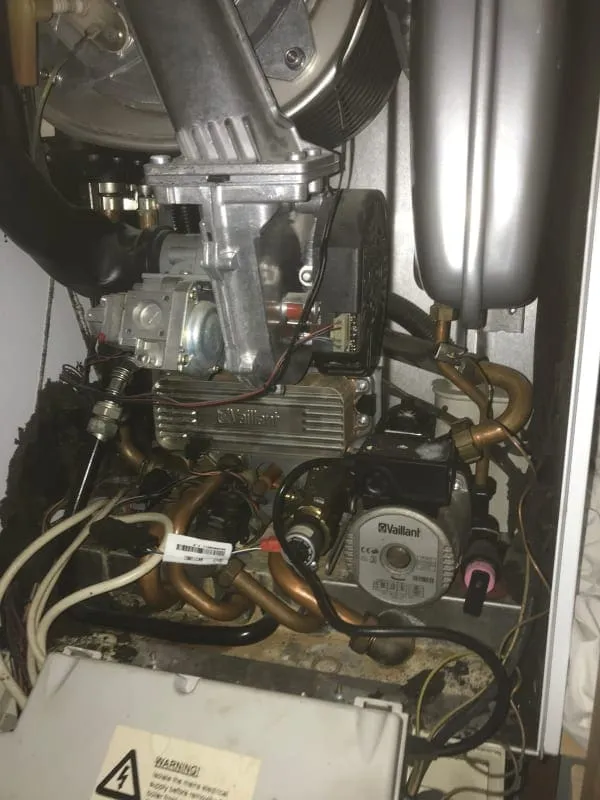
Anything that points to the inside of the boiler is an engineer job. That includes faults with the fan, flue, gas valve, flame sensor, temperature sensors, pump, diverter valve or circuit board. These parts sit behind the boiler casing, and only a Gas Safe registered engineer should open it.
You should also call if:
- The same code comes back after one reset
- The code is not in your user manual
- The manual says to contact a qualified engineer
- The boiler is making unusual noises, leaking or smells of fumes
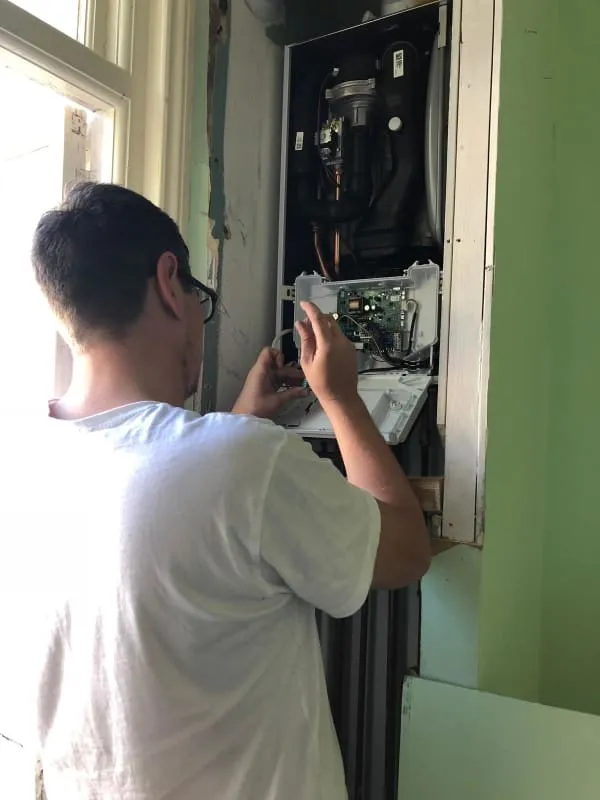
Please never open the casing, take panels off or try to adjust the gas valve, whatever a video online suggests. Gas work must only be done by a Gas Safe registered engineer, and unqualified work on a boiler can be deadly.
Why codes keep coming back
A code that keeps returning is a symptom, not the fault itself. Repeated pressure codes point to a leak or a faulty expansion vessel. Repeated ignition codes can point to worn parts or a gas supply problem. Repeated overheat codes often mean poor circulation, sludge or limescale, which is common in London’s hard water. Regular boiler servicing catches many of these before they cause a breakdown.
When to call an engineer
- Any code that relates to parts inside the boiler
- Any code that returns after you have done the safe fix once
- No heating or hot water and you cannot identify the code
- You smell gas. Leave the property and call the National Gas Emergency Service on 0800 111 999
We repair boilers across South and South West London and north Surrey, from Battersea to Wimbledon. Book a boiler repair, or see our prices: labour is £120 an hour including VAT (£100 + VAT) Monday to Friday, 8am to 5pm, and £180 an hour including VAT (£150 + VAT) at other times.
Before you book, call Lee on 020 8050 5913 with your code and boiler model. If it is something he can talk you through, there is no charge.
Stuck? Call Lee.
If you are not sure it is safe, stop and call. Advice by phone is free.
020 8050 5913